Saturday, 4 September 2021

Micro Review 37


Light Rains Sometimes Fall by Lev Parikian (Elliot & Thompson Ltd)

NetGalley eProof

I think that I'll be taking a break from nature writing books soon, you can have too much of a good thing after all.

If this is the last one I do read for a while then I've gone out on a real high. I loved Into the Tangled Bank which was longlisted for the Wainright prize but I think if anything I loved this one more!

Taking inspiration from the Japanese, who split the 4 main seasons in to 72 smaller seasons, Parikian stays very local and looks at his 'patch' as the seasons roll on. It helps that 2020 was the year picked for this scrutiny of the micro seasons as we all had to stay local for so much of the year and charting the small, incremental changes was easier.

I think that this book was such a delight for me as our regular stomping ground over the past year has also been a large, urban cemetery and so many of Parikian's sightings matched our own it was a little like I'd kept a better diary of last year.

The micro seasons also make so much more sense, especially in seasons like spring and autumn which differ so much from the start to the end. These small chapters also made me look back at my Twitter and Instagram feeds to see if our sightings matched those written about. The one thing I am slightly jealous of are Parikian's fox sightings - as yet that is one mammal we've not seen.

I really hope that this makes next year's Wainwright Prize, it is a brilliant addition to the nature writing canon as well as an incredibly good memoir to 2020/2021 when we all discovered our local patch and wildlife.

Wednesday, 1 September 2021

Micro Review 36


The Island of Missing Trees by Elif Shafak (Viking Books)

advance reading copy

My love of Greece, and Greek set books, is probably clear to regular readers of this blog and a little while ago I had the chance to read two novels set in Greece in a row. Both of them had a mid 20th century setting and I enjoyed them both, however it is Shafak's The Island of Missing Trees that has stuck with me the most.

Ruth Padel's Daughters of the Labyrinth was very readable and although set in Crete during WW2 it was as different from Hislop's The Island as can be and gave me a new perspective on the Cretan occupation. It also came bang up to date the end with mentions of the Coronavirus pandemic, but unlike in some books this felt natural and not a way to shoe horn in the way the world changed in 2020.

However The Island of Trees takes up the post war history of Greece, and in particular that of Cyprus. Again this is a topic that Hislop has covered but this book is completely different and again adds a new dimension to the story.

It starts in modern day London with teenager Ada struggling with family secrets and history and slowly we learn how her family was impacted by post war unrest in Cyprus and then the Turkish/Greek conflict later in the century. More interestingly much of the story is narrated by a fig tree, who of course is old enough to have seen all of the history covered in the book.

It sounds trite but the device works completely and while I could see the broad arc of the story - two Cypriots falling in love but then torn apart as one is a Greek Christian and the other a Turkish Muslim - but I found it worked perfectly, and I loved the asides and recipes that the tree allowed us.

In my last volunteering session at the Royal Norfolk Regimental Museum before the pandemic I was looking at artefacts donated to the museum donated by soldiers who were on Cyprus during some of the timeframe covered in the book. Shafak's writing mirrored the items I'd handled so accurately I trusted her story telling completely, and even though I've never visited Cyprus I felt I could 'see' all of the action and could accept the fig tree as narrator even more willingly.

The one thing I wasn't so sure of was the target audience for the book - much of the time Ada was the lynchpin of the modern story and being a well drawn teen character I started the book thinking that this was for a YA audience. However as the novel progressed it became a much more adult tale and Ada's voice seemed just a little out of balance with the book for me. I can't quite explain what I mean but I fear that the opening will put off fans of Victoria Hislop, and that the later parts will alienate the YA readers and the book will fall down a hole and be lost - which it doesn't deserve.

Anyhow if you are missing your Greek fix as much as me this summer I recommend both of these books - but be warned they won't help with the longing for Greece!

Tuesday, 24 August 2021

The nature theme continues


"What To Look For in..." text E.L. Grant Watson , Illustrator C. F. Tunnicliffe. Ladybird Nature Books

own books

My interest in nature and nature writing hasn't waned after my Wainwright reading, and nor has my enthusiasm for being outdoors and looking at the world around me. This quartet of books makes the most of these facts.

Unlike spotter's guides or the i-Spy books these books are written as a narrative and are matched with beautiful pictures of the countryside.

I'm not 100% certain which came first, the picture or the text, but it really doesn't matter as both are fabulous and if you can't get out in to the countryside for any reason then these books are a way to take a walk. They are also a form of time travel - they date back to the late 1950s and very early 1960s!

As well as being able to use these as a guide on what to look for while we are out an about in Norfolk (or further afield) I'm also going to find it interesting to see what changes have occurred in the 60 years since they were written. Have the seasons shifted date? What species were common but are now more scarce? The one that instantly leapt out was the lapwing, in these books they feature in every season and in large numbers. Even though we live in an area with lots of nature reserves and birding opportunities we do now only see them in small numbers and people seem very excited to see them.

The biggest changes that I can see from  just looking at the pictures is not to the natural world, but rather to farming, despite there being some machinery in the pictures it is clear that it was a really labour intensive industry just 60 years ago, and that apart from replacing the horse with a tractor not a lot else had changed. Yesterday Mr Norfolkbookworm and I watched one combine harvester and one trailer harvest nearly an entire field during our half hour walk.


These books were republished in 2020 and  I have these new editions on order from the library - I'm intrigued to see the new images and if the text has been rewritten for the 21st Century. 

Right now to look more closely at Autumn so I know what to be looking out for (and also marking all of the things I've already seen whilst still in summer...

Saturday, 21 August 2021

Micro Review 35 (Wainwright Prize)


Skylarks with Rosie by Stephen Moss (Saraband Books)

Own copy

I feel a bit bad for this book and my response to it, if I hadn't read and loved The Consolation of Nature  so recently I think that this one would have spoken to me more.

Once more I really liked the concept of exploring a local setting more deeply, and also the diary format. It was also interesting to read another personal account of the first lockdown last year but for me it just didn't reach the heights of Consolation - not a fault of the book, just the reader.


Wednesday, 18 August 2021

Micro Review 34 (Wainwright Prize)


The Circling Sky by Neil Ansell (Tinder Press)

Library book

Unlike some of the other books this was a book with a set location and charts Ansell's exploration of just one place over the course of a year.

As Ansell explores the New Forest we learn more about why he considers this his 'home turf' and he weaves in his family and personal history in a way that, for me, blended perfectly with the observations of the natural world.

I very much liked the idea of exploring just one location over the course of a year - since the start of the pandemic Mr Norfolkbookworm and I have definitely got to know several local areas far more and are enjoying watching them change through the seasons. However as the area explored was the huge New Forest each visit seemed like a new location and I was a little sad to lose the tight focus.

I have now added the New Forest to my list of places I'd like to visit, and put another of Ansell's books on reserve in the library - signs that I liked this book a lot!


Sunday, 15 August 2021

Micro review 33 (Wainwright Prize)


Into the Tangled Bank by Lev Parikian (Elliot & Thompson)

Library eBook

This was my out and out favourite book from the long list and I am really sad that it didn't make the short list and thus can't win.

This was a book that resonated the most with me. Parikian explores nature in the same way that I do - when he's in a new place he explores it, and occasionally makes trips to areas for a walk or to learn more but he's just as happy looking at the world closer to home.

The writing made me feel that yI was discovering things along with Parikian rather than him just lecturing me, and I certainly felt like I was sharing his walks and trips as he took them.

This was another book that let me see myself in the writing, another writer who approaches the natural world in the same way as me but is far more talented in communicating what he sees than I ever could!

Parikian has another book coming out soon and I am very excited to have an advance copy of that thanks to NetGalley.

Thursday, 12 August 2021

Micro Review 32 (Wainwright Prize)


The Stubborn Light of Things by Melissa Harrison (Faber & Faber)

NetGalley

This was another book that I'd read before the Wainwright Prize long list was announced, and was another book I was really pleased to see made the list - and one I was really sad that didn't go further, it is definitely a contender for being on my best books of the year in December.

Another book that was great to dip in and out of as it was written in diary format - a style I really love. Another real plus about this book was that I knew the places Harrison talks about, especially when she is writing about Suffolk.

My favourite thing about this book is the way that Harrison appears to experience nature in the same way that Mr Norfolkbookworm and I do - it feels natural and points out things that non experts can see. The details are there but it is the ordinary that shines, and the details are written so that everyone can feel the wonder and even if you live in a city centre there are still natural wonders to see.

On the back of how much I enjoyed this book I went out and bought Harrison's novel All Among the Barley and I'm sure it won't be that long before it gets to the top of my tbr pile...


Monday, 9 August 2021

Micro Review 31 (Wainwright Prize long list)


Vesper Flights by Helen Macdonald (Jonathan Cape)

NetGalley

I was lucky enough to have the chance to read this back in July 2020 thanks to NetGalley and so I was very pleased to see it on the long list.

Unlike H is for Hawk this wasn't a straight forward narrative, this was a collection of essays, musings, and articles all with nature as a theme.

As is always the case with an essay collection not every one hit the mark for me, but I loved the format - a book to really dip in and out of. Macdonald's writing is very readable and I like her style a lot.

It didn't quite hit the high of H is for Hawk but I am really surprised that it didn't make the Wainwright shortlist. I was amused to see that nature writing is no different to other genres in that books with similar themes come along at the same time - 2021 seems to be the year of the swift!

Friday, 6 August 2021

The Wainwright Prize Shortlist


The shortlist for the 2021 Wainwright Prize for Nature Writing was announced on the 4th August and I did manage to read all of the long listed titles before the list revealed - just I finished my last book at 10am on the day!

The official shortlist really doesn't match my personal list, and indeed neither of my favourites made the list at all. I'll review them in separate posts over the next couple of weeks,

The short listed titles are below, with my thoughts on them in blue.

The shortlist for the 2021 Wainwright Prize for UK Nature Writing is: 

English Pastoral: An Inheritance, James Rebanks, Penguin Press - from this list I think it is my 2nd favourite, I really enjoyed the parts on how the farm was run and the talk of traditional farming as well as the parts on how Rebanks is trying to return to these (or improve on them). It did give a good feel on the pressures felt by farmers.

Featherhood, Charlie Gilmour, Orion Publishing Group - I really wasn't so keen on this one at all, for me there wasn't quite enough nature in it (and the idea of a bird flying freely in a flat along with all its habits freaked me out).

I Belong Here, Anita Sethi, Bloomsbury - This was the last book I read from the longlist and for the most part I really enjoyed it, and it was really eye opening at times but every so often the timeline/continuity felt out and I couldn't mentally follow Sethi's journey which disengaged me from the narrative somewhat.

Seed to Dust, Marc Hamer, Vintage - This was the first book I read from the longlist and while I am not a gardener in any sense of the word at all I did enjoy the gentle pace of this book, it was a restful read that flowed just as the seasons do.

The Screaming Sky, Charles Foster, Little Toller Books - I really wanted to love this book, seeing the first swifts of the year is something I look forward to annually. The chapters were interesting and the illustrations beautiful but my issue with this book was the author. There is lots of talk about what could be changing the swift's patterns and threatening them and climate change is one of the big factors here - yet the author thought nothing of taking multiple flights around the world to see his favourite bird...

The Wild Silence, Raynor Winn, Michael Joseph - I'm going to make myself very unpopular with my thoughts on this one but I really didn't like Winn's first book (The Salt Path) and although I did finish this one I can't say I enjoyed it. I'm not sure why I don't like her writing but it just really leaves me cold and uninterested

Thin Places, Kerri ni Dochartaigh, Canongate Books - This one grew on me slowly but at times moved me to tears. As well as finding the writing beautiful the weaving of the author's history, Ireland's recent history and the way nature is a constant just made for a great read - if depressing at times.

From this list I think I'd like Thin Places or Seed to Dust to win but as I was so out of step with the books I wanted to see on the shortlist I wouldn't use my thoughts as a guideline!


Tuesday, 3 August 2021

Micro Review 31


The Book  Lover's Bucket List by Caroline Taggart (British Library Publishing)

Library book

This book for me is a cautionary tale in reviewing, as at first pass of this one I was a bit disappointed in it. However since those first thoughts the book has stuck with me and new thoughts keep rising to the surface and I think that my first response was too harsh.

A literary tour of Great Britain in just 100 locations is of course going to miss out lots of authors and locations, and as is so often the way in the publishing world the book is going to be quite London centric. 

The information within each entry is quirky, informative and interesting and that I was upset my favourite authors and locations weren't included is a fault with me and not the book! 

I also think that I am spoiled by living in Norfolk, a county that is very proud of its authors and literary locations - there's a whole website dedicated to them after all!

The book has definitely added some interesting places and authors to my own bucket lists and there's certainly some places in London that I now look forward to visiting.

This book has made me think what locations would appear in a Norfolkbookworm's Bucket List, and how I would structure it differently - who knows if we end up in another COVID lockdown this might become my pandemic project...

I'm glad I didn't write this review on finishing the book, and I think that I'd be even more generous with my thoughts if it was called A Book Lover's Bucket List rather than The Book Lover's Bucket List!

Saturday, 31 July 2021

Armchair traveling


Subpar Parks by Amber Share (Plume Publishing, USA)

Social media is often seen as a negative place but just occasionally there are real pockets of joy. Subpar Parks is one of the latter. Talented artist Share takes one star reviews of America's wonderful National Parks and illustrates them in a style very reminiscent of the traditional Parks publicity.

On social media the reviews and images are presented without comment but in this book Share has added details about the park, extra images and even tips from park rangers.

Some of the reviews are crazy - dismissing the Grand Canyon as 'just a hole' for instance, but the book never feels cruel just a delight and one when I am missing travel more than usual I shall dip into (and also use to help plan future trips - but shhh! don't tell Mr Norfolkbookworm that)

You can find more pictures and reviews on Instagram by searching for @subparparks 

Tuesday, 27 July 2021

Pretty Post


Presentation is everything

At the weekend I was lucky enough to receive an advance copy of A Single Rose by Muriel Barbery, trans. Alison Anderson. (Gallic Books)

This book isn't out for a while and I will review it closer to publication date but I thought I had to talk about it now just to spread the love for the way this proof was packaged.

Everyone likes getting a present and while I was really keen to read the book it has to be said that the care and love that went into the parcel definitely bumped the book up the to be read pile.

It isn't just this parcel that has been so beautifully presented lately. Bex from Ninja Books always makes her parcels a delight to open and the new publishers Fox and Windmill added some lovely touches to my recent Twitter prize. It isn't all about the packaging for proofs & prizes though,  I also received a lovely handwritten & personalised card with my order from Salt Publishing.

Throughout this year I have been trying to use independent publishers and independent bookshops to feed my book habit and it is the care they take with every parcel really does make this a pleasure. I do use bigger, online, book retailers too - especially for ordering books from out of the UK - but where ever possible I am supporting the independent businesses and I think that this has been the easiest resolution I've ever stuck to!

Friday, 23 July 2021

Micro Review 30


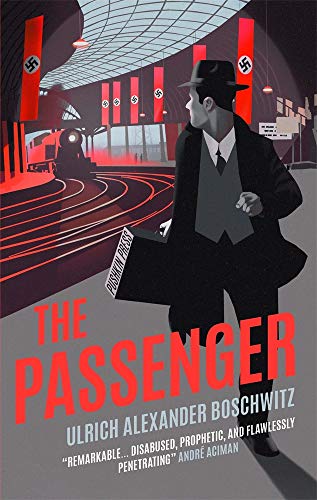
The Passenger by Ulrich Alexander Boschwitz, trans. Philip Boehm. (Pushkin Press)

How to talk about this book? Set in November 1938 in the few days after Kristallnacht it follows Otto Silbermann as he travels around Germany looking for peace and an escape route.

The tension mounts with each journey Otto takes as he frantically tries to stay a free man despite being Jewish. At times it feels more of a roller coaster than a succession of train journeys made by Otto as he crisscrosses Germany.

What is so interesting about this book is that Boschwitz wrote the book in the weeks just after Kristallnacnt and it is an immediate response to the events that saw German Jews villified, arrested and finally imprisoned in concentration camps.

To say I enjoyed the book is impossible - mainly because of the subject - but it was utterly compelling and I had my heart in my mouth repeatedly. It doesn't have a neat ending, and many story threads are left dangling but that is how it has to be - it is a contemporary response to the events of 1938. Otto won't know how his story ends and thus it is right that we don't - that we have to use our imaginations.

The tight focus on Otto took some getting used to as I started the book, I wanted to know more about the supporting characters that we meet. By the end however this tunnel vision worked for me as it conveyed the fear, paranoia and claustrophobia of what life in Germany must have been like for a Jew in 1938.


Boschwitiz's own story is no less compelling and shocking than Otto's and I do urge you to give this book a go if you come across it, so very different than other novels I've read set around this time.

Many thanks to Norfolk Libraries for buying the book after I mentioned it.

Thursday, 15 July 2021

Shadowing a book prize for fun


The Wainwright Prize for UK Nature writing

In the past I have been part of 'official' book prize shadowing projects for what was the Foreign Fiction prize and also the Women's Prize for fiction and enjoyed the process a lot, shadowing means that for a short while you don't have to worry about what you've got to read next as there's a ready made list just waiting for you!

As I've really enjoyed so many of the books that fall under the umbrella I thought that this year I'd try to read all of the books nominated for the 2021 Wainwright Prize. On exploring their website I realised that they have more than one prize so I limited myself to 'just' the 13 books on the UK Nature Writing longlist which was announced in June:

Vesper Flights, Helen Macdonald,  Vintage

The Stubborn Light of Things: A Nature Diary, Melissa Harrison, Faber

Seed to Dust, Marc Hamer, Vintage

The Screaming Sky, Charles Foster, Little Toller Books

English Pastoral: An Inheritance, James Rebanks, Penguin Press

Into The Tangled Bank, Lev Parikian, Elliott & Thompson

Thin Places, Kerri ní Dochartaigh, Canongate Books

Birdsong in a Time of Silence, Steven Lovatt, Penguin Press

I Belong Here, Anita Sethi, Bloomsbury Plc

Featherhood, Charlie Gilmour, Orion Publishing Group

The Circling Sky, Neil Ansell, Headline

The Wild Silence, Raynor Winn, Michael Joseph

Skylarks with Rosie, Stephen Moss, Saraband

My growing interest in this genre meant that I'd read two of the books before learning they were on the list and thus 11 books between June and 4th August didn't seem quite so overwhelming. I know that this statement sounds like I am mad but these books are such a soothing read at the moment that it sounds wonderful rather than stressful.

The mixed weather so far this summer has meant that sofa nature walks have often seemed more appealing than the actual activity and now that there's only three weeks until the shortlist is announced I feel that I really might get all the books finished - I've finished 8 and am about half way through number nine...

The side benefit of all this reading is that I am able to borrow so many of the books from the library either in physical or eBook editions, the ones I can't borrow are letting me continue to support independent publishers and bookshops as I acquire them!

Unlike other prizes that I've shadowed I am not at all falling out of love with the genre as I effectively binge read the subject. The books are all so varied that it is wonderful and not at all predictable I've definitely got my own favourites for ones I'd like to see on the shortlist!

Once the short list is out I'll start posting my reviews and thoughts on the books, but for now I am going to curl up on the sofa while listening to the bees on the honeysuckle that is just outside the window and making the front room smell lovely!


Friday, 9 July 2021

Micro Review 29


Darwin's Dragons by Lindsay Galvin (Chicken House Ltd.)

Copy loaned to me by the KentishBookBoy

As predicted last year when my nephew and I were reading and reviewing together the time has come where he has fallen in love with a book so much he was insistent I read - and he even lent me his treasured copy.

I feel a bit bad as shortly after I saw KBB and he lent me the book a whole new raft of reading for a project came up and Darwin's Dragons slipped down my to read pile for a while. However a wet and stormy weekend (and a text from KBB) made me abandon everything else and just settle down with this book on a Sunday afternoon.

Well I am kicking myself for not having read the books sooner as I did proceed to read the book from cover to cover during the afternoon and I found myself swept away with Galvin's story telling - the book was so visual that like all the best books as I was reading I also had a 'movie' in my mind.

The book takes Darwin's trip on HMS Beagle and his visit to the Galapagos Islands as a starting point, and the main character is his young  assistant Syms Covington. A storm sees Mr Darwin fall overboard from a rowboat and Syms then saves him but is swept away as he does so. Landing on an unexplored, volcanic, island Syms's adventures continue his life is saved repeatedly by a lizard he names Farthing. In an exciting volcanic eruption Syms and Farthing save some eggs from a lava tube and then as they escape the eruption they are rescued by the Beagle.

The rest of the book is about the return to England after the full Voyage of the Beagle and then the struggle to get their ideas accepted and in keeping the lizards alive in the bleak Victorian London climate.

This summary does give just the bare elements of the story and there is so much more to it than I've explained here - and it really is quite fantastical at times, although I just managed to suspend belief and to go with the flow.

The modern day environmental message is conveyed gently and not too obviously, and the other message of getting people to believe in what you are telling them is also gentle and not too didactic.

As I came to the end of the book I wanted to know more about the Voyage of the Beagle which is always a good sign, and I had overcome my initial thoughts that I wanted the book to be the historical story and not the fantasy one. A day or so on from finishing the story I am still thinking about it (and in a positive way) so that for me marks it out as a good book!

Huge thanks to KBB for lending me this book - what shall I read next though?


Monday, 5 July 2021

Blog Tour - How to Be Brave


How To Be Brave by Daisy May Johnson (Pushkin Press)

electronic proof provided by NetGalley and Pushkin

Today is my stop on the blog tour for How to Be Brave - and I am very pleased to be a part of this tour as I've been sat on my review for this book for months!

I can't remember when I became a fan of the school story genre. I definitely read Blyton's Malory Towers books as a child and I enjoyed them, however I wasn't such a fan of her St. Clare's series. I also recall borrowing Anne Digby's Trebizon books as a teenager.

At some point before I left school I discovered The Chalet School books and even as an undergrad I wasn't ashamed of reading the genre - and there were some hardbacks in the Uni library so reading them counts as study surely?! With the growing internet I found out about fan clubs and that there were other authors who wrote in the genre and lo! a collection was started.

I've never been ashamed of reading children's books, even in public, and Twitter has been a great way to find likeminded people and new books. This was how I found Johnson and the news of her book.

How to Be Brave is very much in the traditional school story mould - due to a series of events and mishaps Calla ends up at the boarding school her mum attended but all is not well at this incredibly unorthodox convent school. Somehow it is all related to Calla, her mum and a rare duck...

The book mixes school stories, adventure stories, a few gentle issues and healthy dollop of Arthur Ransome -  but at no point did it feel derivative and I loved reading something so familiar and yet so new. It also features biscuits and other sweet treats. Lots of them - & I defy you to read this book without at least wanting to raid the biscuit tin!

The title 'How to Be Brave' relates to so much of the story and it isn't about big acts - Johnson recognises that for each of us bravery means something different and explores this in such a gentle way that it is only afterwards you realise just how cleverly and subtlety she has made the point.

There's lots of humour and Johnson makes much use of footnotes throughout the book. These act in the traditional way, as a way of crowbarring an extra plot in, and also as a Basil Exposition. By the end of the book I was a little weary of them but they were in the main great fun - I can see that the will make the book hard to read aloud however.

This was a fun book, and I'm hoping that Johnson will write more as it was a lovely  to spend a couple of afternoons with her characters.

I'm looking forward to finding out what other readers thought about this fun read.


The book is published by the wonderful Pushkin Press and can be ordered directly from them here, but do also check out your local library and see if they have copies (and ask them to order it if they don't) as authors do get an income from library loans.

Sunday, 27 June 2021

Books about Books and never ending reading lists


Down the rabbit hole thanks to Norfolk Library and Information Service

I’ve become very meta at present and many of the books I’ve been reading have been about reading or books. I think that perhaps my (not so) inner bookworm is out of control…

First up was Reading the World by Ann Morgan. This book charts her experiences of spending a year, 2012, in trying to read a book from every country.


This wasn’t as easy as you’d think as there’s a lot of dispute about who does appear on such a list – as Morgan found this is an incredibly fraught issue with many possible answers.

Her next issue was finding books that she could physically read – not very much literature gets translated into English in the grand scheme of things.

Then there was the issue of  finding the books (not every nation has a proud written word culture) and then getting them to England for reading.

The book wasn’t so much about the books read for the project as the process around it, however all of Morgan’s reviews are still available on her blog – along with lists of other books that could have been chosen but weren’t.


Next was Stig Abell’s Things I learned on the 6.28: a guide to reading. In 2019 Abell decided to focus the reading he undertook on his morning commute in an attempt to expand his reading, and looks at genres in more detail. Each month had a different theme such as Poetry, Shakespeare, American Fiction, and then Abell mixes his thoughts on the books with his daily diary and his research in to the author/genre.

As the world changed so much in 2020 this book felt a little bit like a historical document as I read it but dipping in and out reading a month at a time I found I really enjoyed this book, and like the best books about books I have added a fair few new titles to my “I’ll read these one day” list.


The final book in this genre for now is Tom Mole’s The Secret Life of Books: why they mean more than words. Unlike the other two books this isn’t about specific titles but is all about what the book as a physical object means to a person.

The 8 chapters take themes like Book/Life or Book/Self and then explore what the book brings to each of these areas, a lot of what Mole says resonates with my thinking on the topic – especially in light of reading Woolf’s A Room of One’s Own last year. Spread through the book are also some works of art that feature books and Mole explores what the books have to say about the paintings which is fascinating and a topic I’d like to read more about!


Three very different books and ones that have made me think a lot about my own reading. I love translated fiction and so will definitely be using Morgan’s books to learn more about literature from other countries, and Abell’s focused reading was inspiring.

However I can’t see myself dedicating my reading time to such specific (and limiting) projects. I look at my ‘to read’ pile and think that I should read all of that before anything new comes along. I am trying to read more from it but I’d hate not being able to read something new and exciting that came my way, and it would stop me from taking part in some of the exciting projects that do cross my path.

Reading is a pleasure and I want to keep it that way, several times while reading Morgan and Abell I got the feeling that their projects had become a chore. I want books and reading to stay as personal and pleasurable as possible – for as Mole says, the book really is a wonderful item.


Sunday, 20 June 2021

Tea Break Reading


Short Stories and Essays

Working from home for the last umpteen months has had a surprisingly good effect on my work/life balance. When I was in the office I would rarely take a tea break (or a lunch break) away from my desk and would just work straight through my hours. I would take the recommended VDU breaks each hour but not a full break of any description.

Mr Norfolkbookworm has always been better at this than me and now I make sure to try for a proper tea break each morning (I finish my working day at lunch time so lunches are definitely away from the computer). I've been using this break to read and I've found that essay collections and short stories are fantastic for this time.

I've mentioned before that I've been reading nature journals and almanacs at tea time but now I am really enjoying a new set of short story collections...

These books are published the independent publisher, Comma Press, and pull together short stories set in cities around the world. Unlike other books like this that I've read in the past these books are actually translations of stories from writers who actually live the city/country and so are a real peek into other lives and cultures.

Each book comes with a fascinating introduction and all of the translators are named - two things I really love in a book!

So far I've treated myself to 3 books from the series:

  • Tehran - because I read a book set in Iran during the 1970s as part of one of my reading projects and it left me wanting to know more about the country, then and now.
  • Tokyo - because I've fallen in love with so many novels from Japanese writers (or set in Japan) over the past year.
  • Venice - because after a year of not travelling I'm looking hard at my wish list's of places I want to visit. This is a city I've bumped much higher up my list as it is at such risk from sea level rise/climate change.
I'm not sure where I saw these books mentioned first but I would imagine that it was thanks to Bex at Ninja Book Box and the wonderful #IndieBookNetwork - they've also helped me keep to my resolution of supporting both independent bookshops and independent publishers!

I now look forward to my tea break hugely as I can't wait to discover more about a place through its writers. Once I've finished these friends have recommended Flannery O'Connor and Shirley Jackson as writers in this genre to try - even if we get back to the office I think my short story habit will remain! 

Wednesday, 16 June 2021

30 Days Wild and time off work


The annual 30 Days Wild initiative from the Wildlife Trusts has become a real highlight of my year, and while this past year has seen us going out for walks on most days and noticing our surroundings, this month long focus really marks the start of summer for me.

This year the start of June has also coincided with us taking some time off work, seeing family and spending a lot more time outside than we do usually.

This has been dreadful for my reading (although a new project is about to start which will see me reading more and to a deadline!) but the glorious weather means being outside is more of a pleasure that curling up with a book.


I do regularly update my Flickr account (www.flickr.com/norfolkbookworm) and you can see some of my favourite shots there, but here are just a few from the past few weeks. I will try to start reading and reviewing again soon but as we're off for another wildlife/photography jaunt next week don't expect too much!


Saturday, 5 June 2021

Micro Review 28


The Consolation of Nature by Michael McCarthy, Jeremy Mynott and Peter Marren (Hodder Studios)

Library book

Nature writing books have become one of my favourite genres. I think that this goes back to 2018 when I noticed time in nature helped me to recover from my brain haemorrhage, and was reinforced last year as Mr Norfolkbookworm and I tried to get out for a walk every day as a way of coping with the pandemic and lockdowns.

This book is one of the first I've read that concentrates very specifically on events in 2020 and it is a detailed look at late March to the end of May - spring. In 2020 this time frame also coincided pretty much with the first lockdown.

The three authors live in different parts of the country (London, Suffolk & Wiltshire) and they keep diaries which are a mix of nature observations, research into natural phenomena, and diary of the pandemic.

Incredibly for a book set in three such disparate locations I am a little familiar with each of them and so did feel that I was walking with the authors on their daily walks. Living in a city which is well served with green spaces we were lucky enough to be able to follow the season changes on our daily walks and so I could connect with each author's writing. In a personal capacity it has been interesting to see just how much I was recording weather and nature 'firsts' last year via my Facebook memories.

I am very much a dabbler in bird watching and nature recording but this book has made me want to be better at it and to keep an awareness of natural events so I can be one of these people who say with some authority "the swallows are late this year."

This book is wonderful and I really didn't want to return it to the library - to the extent that I've had to buy myself a copy!

Interestingly just as I finished this book I was approved on Net Galley as an advance reader for The Eternal Season by Stephen Rutt which looks at summer as a season with a focus on last year's in particular. I'm not sure I'm ready to read pandemic inspired fiction yet but I'm certainly keen on these views of 2020.