Showing posts with label biography. Show all posts

Thursday, 20 March 2025

Micro Reviews 15 and 16 (2025)


Agent Zo by Clare Mulley (Orion Publishing) & The CIA Book Club by Charlie English (HarperCollins)

Thanks to the Women's Prize for Non Fiction list I picked Agent Zo up from the library recently and was immersed in her (and Poland's) story of the Second World War and after. 

While we 'know' that Britain went to war in 1939 because of the Nazi invasion of Poland after this event very little made of Poland's war - a paragraph or two about the Warsaw Uprising maybe and possibly a mention of the horrific massacre at Katyn but that's about it. Once the Iron Curtain fell Poland disappears again until the rise of Solidarity and eventually the fall of Communism.

Agent Zo really fills in the gaps as well as adding so much more detail. In focussing on the work of the women's resistance movement we get a new view of war and perhaps a more honest look at the treatment of women in the SOE movement.

What was most shocking about this book was the way that Poland was treated towards the end of the war by 'Allies' and how this fed into the second half of the twentieth century and how Poland became one of the most repressive Communist states.

Which leads on nicely to English's The CIA Book Club which while it does cover some of the same history as Zo focuses far more heavily on the 1980s in Poland and how the CIA helped the resistance movement in Poland (and their supporters in the West) keep the dreams of freedom alive via the printed word.

This book wasn't quite as engaging as Agent Zo and at times read more like a thriller than an exploration of how powerful words are. However as some of the same people from Zo appear in this book it felt very much like a surprise sequel. It also rounded out the time covered in Mulley's book briefly - once Agent Zo had more or less retired - and showed how Communism in Poland was overthrown.

While both of these books cover the past there is a lot that the current world could learn from reading these - especially how carving up a nation without including that country in the negotiations - is a very bad idea with longer lasting repercussions than are even dreamt of.

If you only want to read one book about Polish history then I would have to say go for Agent Zo, but The CIA Book Club really does add to that story. 

Monday, 27 January 2025

Microreviews 6 and 7 (2025)


Holocaust Memorial Day 2025 and some recently read books.

While I was poorly I made an effort to read some of the physical books that I had piled up around the house and with January 27th being the 80th Anniversary of the liberation of Auschwitz it seemed fitting that two of the books were about the Holocaust.

Last year when I posted about the 20 books that had stayed with me the most since reading two of this list were books about the Holocaust and I did write my MA dissertation on the way that it is portrayed in children's literature so it should be no surprise at all that I had books waiting on my TBR that covered this topic.

The first one I read was Other People's Houses by Lore Segal (Sort of Books)

This is a fictionalised autobiography covering her life in Vienna pre-1938 and then her childhood in Britain after she was one of the children evacuated on the Kindertransport. It was a fascinating read because even though it was a novel it was so detailed and personal that it could be mistaken for autobiography.  Segal explains this choice in her afterword explaining that while what she writes feels like her truth she knows that this isn't the case as historical facts don't line up with her memories and so to avoid complaints writing it in a fictional way let her tell her story as she saw it.

Segal was lucky in that her parents did also manage to escape Vienna and come to the UK (although due to a quirk in the system they were not allowed to live with Lore) but the feelings and issues that this caused are also covered in the book. Segal doesn't always come across in the best light but again this adds to the accurate feel of the book.


I Seek a Kind Person by Julian Borger (John Murray)

Like Segal's book this also is about Jewish children who left Vienna in 1938/39 but rather than coming on the official Kidnertransport the children featured here came via adverts placed in the Manchester Guardian - desperate parents pleading with British people to foster their children.

The book is centred on Borger's father, who was one of these children and who sadly committed suicide in the 1980s - as Borger says, the reach of the Holocaust didn't end with the liberation of the Camps in 1945. We learn much more about life in Vienna before the war and then about the means and methods that people did escape Austria before war broke out.

This book is more scholarly and impersonal than Segal's account but they compliment each other perfectly and this one shows that even though Other People's Houses is all from memory Segal's memories were accurate and although each journey was different there were incredible similarities in all of the evacuees stories.

Neither book made easy reading, but there is (dark) humour in them both and even though I have read other books about Kindertransport experiences I learned new things from each book and in the challenging times we are currently living in it seems important to read and remember what happened 80 years ago in the hope that it can't happen again.


Monday, 3 July 2023

Micro Reviews - connected books (10 & 11)


Changing the way we think about the Dutch experiences of World War Two

A few years ago I read and reviewed Bart van Es's book The Cut Out Girl which opened my eyes to another side of the Dutch experience in WW2, as I said then the prevailing feeling is that the Dutch had a good war, protected the Jews and stood up for the Nazis but this really isn't the case.

Nina Siegal's The Diary Keepers (William Collins) uses the extensive archives of WW2 Diaries held in Amsterdam to tell a rounded story of WW2 as people recorded at the time.

The book includes many voices but concentrates on diaries from a Nazi-sympathising Dutch policeman, an ardent  female Nazi party supporter, an ordinary factory worker, a Jewish woman working for the Jewish Council, a Jewish journalist held in Westerbork Concentration Camp for well over a year, and a Christian woman at the heart of a resistance ring who protected dozens of Jewish people.

With Siegal's commentary framing entries a much fuller picture of Holland between 1940 and 1945 this was eye opening, even for me who has read so much around the Holocaust. There's lots of balancing views given but the reader is left to draw their own conclusions overall - and who knows how any of us would actually act if we were in the same situation.

After finishing this book I was approved for a book on NetGalley called My Friend Anne Frank by Hannah Pick-Goslar (Ebury Publishing). Pick-Goslar was, like Anne Frank, a German Jewish girl who's family had moved to Amsterdam in the 1930s. She was good friends with Frank and lived next door to them- she is mentioned in several times in Anne's diary.


However this book is so much more than someone tagging on to Frank's fame. While Pick-Goslar did survive the war, and Belsen-Bergen, her account of her experiences is one of the most moving Holocaust accounts I've read and I think that it does the incredible story a disservice to market it in terms of being about Anne Frank.

It tied in so nicely with The Diary Keepers  as many of the people Pick-Goslar talks about in Amsterdam are also featured in depth is Siegal's book and both narratives help build a full picture of the choices people had to make and of how life was at the time.

Pick-Goslar's account of liberation from the camps and her physical recuperation was as gripping as her actual wartime life, and filled in more of the "what came next" narrative for me. I really hope that this book does become as important in the Holocaust memoir cannon as Anne Frank's Diary.


Wednesday, 9 February 2022

Micro Review 52


The Betrayal of Anne Frank by Rosemary Sullivan (Harper Collins)

Long term followers of my reviews know that books about the Holocaust feature reasonably regularly in my reading. It has been well over 30 years since I first read the The Diary of Anne Frank and since then I've read quite a few books about her, the helpers and her family but I've never been obsessed with knowing who did betray those in the Secret Annexe.

This book treats the events of August 1944 as a cold crime and a team of researchers, historians, computer programmers and criminologists is formed to work through as many documents and sources as possible to try and work out who was ultimately behind the arrest of the Frank family and the others hiding with them.

Systematically the team work through different theories and show all of their research as they exonerate (or not) those who have been named as possible betrayers over time. In the main each strand is followed from start to finish which I really did like as theories didn't get confused, and with so many names to remember it didn't become overwhelming.

This choice of narrative style did however make me think that the chapters were each written as podcast chapters as at times they did feel a little cliff hanger-ish and overly dramatic.

The book has proved to be controversial with the ultimate reveal of who this team think did betray those in hiding, and publication has been stopped in Holland. 
The team do seem very convinced that they have cracked the case but I think I agree with the critics. For me it felt that they'd decided 'who dunnit' and worked all of their research to show this. I felt that some of the other threads were dismissed as being too flimsy yet the one that they fixed on didn't seem to have any more definitive evidence than the others.
 
The team are also always very clear to say that none of us in 2022 can understand the pressure those in occupied Holland were under, and we can't judge their actions by today's standards. Who knows what any of us would do to survive, or to ensure that our families did?

I'm pleased I read this from a curiosity point of view but I don't think it is the definitive solving of the case that the authors would like it to be. It is also quite telling that they were not given permission to quote from any of the original documents/diary or from any correspondence between Otto Frank and the other helpers.

Wednesday, 16 September 2020

Micro Review 11


March (volumes 1-3) by John Lewis, Andrew Aydin and Nate Powell (published by Top Shelf Productions)

Summer 2020 has been marked with many demonstrations in the UK and USA regarding the Black Lives Matters movement and I have been trying to learn more about the histories and politics around this movement.

A 'you've read x why not try y' recommendation lead me to this wonderful graphic memoir about Congressman John Lewis and his non violent struggles within the American Civil Rights Movement of the 1950s and 1960s. 

The book is framed with by the first inauguration of President Obama and in flash backs tells Lewis' story to show how the struggles of Lewis and others paved the way for the election of a black man as president.

I knew some of the history of the Civil Rights Movement but not much beyond the 'big' moments. This series of 3 books taught me so much more. It isn't a hagiography of Lewis or the Civil Rights Movement and I am sure a lot of things were missed out but it clearly presents history (flattering or not) in a way that packed more of a punch than just a straight biography/autobiography every could.

I'm not a great one for comics/graphic novels as I've said before but discovering a new non-fiction read in the genre was brilliant and as Congressman Lewis died while I was midway through the series (the books were popular on the Norfolk Library e-book catalogue and I had to wait for my reservation on each volume) it seemed a doubly timely read.

Tuesday, 5 May 2020

Following on

The Ratline by Philippe Sands


Back in 2016 I was blown away by Sands' first book East West Street I reviewed it in the middle of the year here and it remained one of my tops books of the year when I came to do my round up.

I was a little concerned about The Ratline for two reasons - 1) it is a second book and they can always be tricky & 2) it is another book about the guilt (or not) felt by survivors of the Holocaust - would it just be too much like the first book?

Happily for me neither of my fears came true and while The Ratline does almost continue from the end of the first book (and definitely from the end of the documentary Sands made) it was completely different and taught me so much about Austria during the Nazi period and also the escape routes used by the Nazis as they tried to flee justice.

Thanks to a lot of the children's literature I've read regarding the Holocaust I was aware of how some of the history played out in Austria before, during and after the Anschluss but this has always been from the Jewish/resistance point of view and so to read about it from the other aide was equally fascinating and horrifying.

While I was aware that some high profile Nazis escaped Europe for a new life in South America I had never given any thoughts to how this happened and so read this part of the tale completely fresh. I knew that there had been complicity in some quarters - but just how much was eye opening.

At the heart of this book is Sands' relationship with the son of  SS Brigadesfuhrer Otto von Wachter as he tries to convince Sands (and the world) that his father wasn't a war criminal responsible for deaths of thousands of people.

Sands manages to tell the tale fairly and with an open mind but at the end you feel you know the truth and Sands' own feelings as well as if he'd been marching up and down in front of you with a banner.

This book has been published at the height of the Coronavirus (COVID-19) pandemic and so many of the events and publicity you'd have expected to see just haven't happened, although there are some good  online interviews and reviews to hunt out. I hope that this book isn't lost in the chaos and that it wins as many accolades as East West Street. I also hope that when the paperback is released the pandemic is receding and there are some events I can get to!

Thursday, 23 May 2019

Dipping in and out

My reading has become a little disorganised of late for three main reasons: a lot of my non fiction reservations arrived in one go at the library, I've been doing some more reading & reviewing for various projects and I've lost my fiction mojo.

This all means that I've not had a lot to say about my reading lately, however thanks to a trip to the theatre I've realised that I do have a book theme to talk about!

A little while ago we went to the Chichester Festival Theatre and saw Shadowlands, the play about C.S. Lewis' friendship with, and subsequent marriage to,  Joy Gresham and then her unexpected illness and death.  The play itself was magnificent, and the cast uniformly good. It was incredibly moving by the end, but shot through with humour meaning that it all felt very natural.

Between booking our tickets and seeing the play I had also read a new novel Becoming Mrs Lewis by Patti Callahan thanks to Net Galley and Harper Collins.  This told the more or less the same story as Shadowlands but from Joy's perspective, it of course is also fiction inspired by fact and I very much enjoyed seeing the dual perspective.  For a full rounding out of the story I am now waiting for Lewis' own version of the story Surprised by Joy to arrive at the library.

In the meantime I am reading Inklings, the biography of the writing group that Lewis started, along with Tolkien, in the late 1930s.  I've always been a fan of C.S. Lewis' work and still own the Chronicles of Narnia book set that I was given for Christmas when I was 7 or 8, but I only read Tolkien as an adult, and to be honest his tales never captivated me in the same way.

However reading Inklings I think that I would have preferred to be in Tolkien's company more than Lewis - like me they greatly enjoyed being out in the countryside walking. Lewis was a serious walker - far more about the distance covered and the conversations had while walking whereas Tolkien much preferred a walk with plenty of time to look at nature and the views rather than covering the miles!
It is all a moot point however as women were not included in either the meetings of the Inklings or on the walks!

I definitely recommend Shadowlands and if you like novels imagining real people then Becoming Mrs Lewis is a good read.


Sunday, 17 February 2019

A winning read

The Cut Out Girl by Bart Van Es


As soon as I saw this book on the Costa Longlist I knew that I'd want to read it and finally it has been my turn to borrow it from the library.

It was worth the wait and despite beating one of my favourite reads from last year (The Skylark's War) in the Costa prize now I have read it I can't be too sad at this turn of events.

I've written before about my interest in books about the Holocaust, in fact my dissertation for my first MA was about how such an event is portrayed in children's literature. This new addition to the canon - all about how one Jewish girl was saved by various Dutch families was right up my street.

The mix of family history (it was the author's family who played a part in saving Lien), modern history and thought, detailed scholarly research and Lien's own autobiography made this book a compelling read. It was also shocking and not just because of the horror of the extermination camps.

I had the idea, mostly gained through literature admittedly, that Holland had a good reputation when it came to their actions during WW2. So many Jews fled there from Germany during the 1930s that to me it seemed like a good place for people to have fled to.
We then have the stories of the heroic people who hid Jews and worked for the Resistance. The praise heaped on those hiding the Frank family and the other similar tales lead to me to believe that while the Dutch weren't quite as helpful as the Danish in saving their Jewish population they were definitely 'good guys.'

Van Es dispels this early on:
"The Jewish wartime death rate in the Netherlands, at 80%, was more than double that of any other Western country, far higher than in France, Belgium, Italy or even Germany and Austria themselves."  p.58
Van Es, like me, was shocked to discover this, and even more so when he found out that along with various geographic and military reasons "it was the native administration that brought death to the Jews" (p. 58).

The poor behaviour of (some) Dutch people continued through the war, and is an integral part of Lien's story, as well as afterwards when survivors returned home or people emerged from hiding.

I know that history is rewritten by the victors but this new knowledge adds to the unease I felt on visiting the Anne Frank House last year. It is so easy to promote the bits of your history that you want people to concentrate on by passing over the negative aspects quickly. The suffering that all of Holland experienced in the winter of 1944/45 and then in rebuilding the country as a liberal land has airbrushed a lot of the darkness.

It is early in the year to be picking 'best books' but I have a feeling that this one will stay with me for a long time, and in many ways is a companion read to one of my top reads from a few years ago - East West Street by Philippe Sands.


Thursday, 19 January 2017

Keeping the resolutions and talking about books!

Take Courage by Samantha Ellis

By jove, Biggles by Peter Berresford Ellis & Piers Williams (Jennifer Schofield)


Non fiction always makes up a large part of my reading year and this year has started both strongly and interestingly with two very different biographies read for two very different reasons.

I picked up Take Courage by Samantha Ellis mainly because of how much I loved her book How to be a Heroine which I read back in 2014 and which ultimately made my best of the year list.
This book is a biography of the 'forgotten' Bronte - Anne and again I found it to be a book I couldn't put down - despite the only Bronte book I've every read being Jane Eyre!

The lack of knowledge of the books didn't matter as Ellis deftly wove enough of their plots into the biography to inform and pique curiosity but without giving away their entire plots.  I also liked how we learned about the whole family, but from Anne's point of view, in this volume - again a brilliantly rounded picture appeared. For me the winning formula was how Ellis herself kept appearing in the book, it made it feel a wonderfully personal story and I think that before 2017 is out I will read at least Anne's books if not more by Charlotte. I'm afraid that Emily's Wuthering Heights still holds no appeal whatsoever.

The second biography I picked up recently was that of W E Johns, creator of Biggles.  I expected this to be slightly more of a chore to read and indeed it is only because of work that I started it.  The library service's World War One online project this year is going to have a slight aviation theme and I knew that Johns had trained pilots here in Norfolk during WW1.

Despite being an avid reader of series fiction as a child I'd not read any Biggles (or Worrals) before and I know wonder if this was because of the campaign against him for being sexist, imperialistic and racist.

My eyes were opened during this read, Johns' links to Norfolk were deeper than I thought (although I will write about that for work not here) and his biographers make a compelling case that he was far more liberal in outlook than he is given credit for.

I've just started my first Biggles book, set in WW1, and I can see already how much his own war is retold in the stories but I will have to report back later on the case of sexism etc., however as during WW2 he wrote a whole series of books about a female flying officer who did fly I think that perhaps he was more liberal than later critics say.  The problem with the books is that they were updated/edited and republished in the 1960s and 1970s and so I wonder if this is where these ideas come from.  I of course am on the lookout for the three different editions of at least one book so I can draw my own conclusions!

So there we have it not yet the end of January and two books reviewed here and also proof that you can enjoy biographies of authors you've not really encountered before - even if it becomes bad for your to-be-read piles and bank balance!


Saturday, 7 May 2016

Theatre 2016: Review Fifteen

Lawrence After Arabia, Hampstead Theatre, London. April 2016.


On a lovely sunny, if not warm, evening Rebecca and I went out to Hampstead to see only the second performance ever of this play. Apart from the (in)famous film Lawrence of Arabia I didn't know an awful lot about the eponymous Lawrence and so I was hoping for a play that would add more to my knowledge while being enjoyable.

I got just what I wanted, and more.

The play is set in the early 1920s as Lawrence is hiding from the press after joining the RAF incognito. His hiding place is with George Bernard Shaw and his wife who are also helping him to edit his memoirs.

We are also treated to some flashbacks to Lawrence's time in Arabia during the war and how he worked with both the Arabs and the Allies during World War One.  The story telling was clear, the actors brilliant and although there were some modern political messages within the play they weren't added with a crowbar, they felt like things the characters at the time would have said.

The last play by Howard Brenton that we saw, Doctor Scroggy's War, had a good premise but was muddled and felt like three plays mixed into one, but this was clean and informative.  I don't think that it is going to set anyone on fire but I now want to know more about Lawrence and the Shaws and have a stack of new books next to my bed ready to read.  I think that this play might end up in my 2016 Top Ten.

Jack Laksey as Lawrence (photo from Hampstead website)

Monday, 16 November 2015

Theatre 2015: Review Thirty-Six

Handbagged, Theatre Royal, Norwich. November 2015.


This was a last minute booking for me and a convenient matinee at the theatre opposite where I work meant I could take a gamble on this.  I wasn't sure that I needed to see another play about the relationship between the Queen and her Prime Minister - after all it wasn't that long since I'd seen the NT Live broadcast of The Audience.

The idea is the same in many ways, no one actually knows what went on when the Queen and Margaret Thatcher but Buffini uses real speeches and her imagination to make a believable play.

In some ways the story telling is quite conventional - we start the day after Mrs Thatcher was elected in 1979 and finish when she resigned in 1990. That is where convention stops.  The play is very hard to explain without making it sound incomprehensible, pretentious and like a long Spitting Image episode and it really is none of those things.

Essentially we have the Queen and Margaret Thatcher in older age looking back on the story, while another two actresses play the Queen and Margaret Thatcher during the 11 years of her rule.  There are also two male characters who play a further 27 parts between them to move the plot along.  The older ladies interject and interact with their younger selves, and older Queen repeatedly breaks the fourth wall to talk to the audience...  see it sounds complicated and dreadful!

It wasn't at all, it was genuinely funny and at times shocking and moving.  I was a young teenager in 1990 when Thatcher resigned but I could remember 90% of the historical facts that were covered in the play, but those that I didn't recognise were explained in such a way that if it all became a bit 'Basil Exposition' then this was also referenced by the cast. Even in a big theatre like Norwich the nuance and expression came through and at times I did think I was watching the real people not actors - impressive seeing as there were two of them on stage at all times.

My discomfort with this play didn't come from the style or the acting but rather from the audience.  The writing of the play is non-judgemental and as I said earlier a lot of the actual lines come from real speeches just altered slightly to fit the stage representations.  Mrs Thatcher was a decisive figure in politics and very far to the right of where my own political belief is, the audience I shared this play with seemed to be, how shall we say..., more appreciative of her stance than I was.  Lines that I found shocking received laughter and applause and on the occasions when characters made comments more in line with my views the audience were stony silent or making their displeasure known.  It made for an interesting afternoon I suppose!

After the performance three of the cast held a q&a session and their insights in to the political mixes of the audiences in various locations was great fun to hear, as were there anecdotes about accidentally staying in role away from the stage!

I wasn't expecting much from my afternoon and I was pleasantly surprised that a play so similar to another recent hit could add to the story and engage and amuse me so thoroughly.  I may avoid weekday matinees for political plays in Norwich however!

Saturday, 26 July 2014

The Right Stuff

Sally Ride: America's First Woman in Space by Lynn Sherr


It seems appropriate for two reasons to be reading the biography of Sally Ride at the moment.

July 20th saw the 45th anniversary of the first moon landing by Armstrong and Aldrin (supported by Michael Collins) and this coming weekend is when Norwich holds the city Pride celebrations.

NASA's first quarter century was full of firsts but flying women and non white men was not on the cards - it wasn't until the late 1970s that minorities and females were selected as potential astronaut candidates.

Ride was among this group and was selected to fly on STS-7 in 1983 to become the first American women to leave the planet (although the 3rd female in space). Return to earth left her as a celebrity and this continued after she flew for a second time and then after the Challenger disaster served on the panel investigating the tragedy.

After leaving NASA Ride, and her partner Tam, set up an incredible programme to encourage girls to become interested in science.  These initiative are not just for girls but they are all about making it normal for girls and women to be scientists. I was always lucky in that my family, and my school, always encouraged me to do what I wanted but this breaking down of barriers is great.  To see one of the amazing initiatives for middle school children have a look at EarthKAM.

While NASA had opened up enough to allow women and minorities to fly into space, sadly homophobia (real or perceived) kept Ride from publicly acknowledging much of her life, but now this is being rectified and the message of the book is that it is okay to be whatever and whoever you want.

Sherr, the author of the book, admits freely that as well as a journalist and biographer she was also Sally's friend and so there may be some bias in the book but for me the important thing is that the story is told and that girls continue to dream, to study and to experiment.

 STS-7 launch photo 1983 carrying 1st American female, Sally Ride, into space

Many thanks to the team at Space Lectures for letting me know about this title.

Thursday, 30 January 2014

Biography of a year

One Summer: America 1927 by Bill Bryson
That Fateful Year: 1914 by Mark Bostridge


It is no secret that I like to read non-fiction, in fact so far this year I've read a lot more fact than fiction but one new trend that I really like is the fashion for picking a year or a season and writing its biography.

Last year Bryson's 1927 made my top 5 books and I loved the way that he flitted from topic to topic, place to place, person to person but connected them all to tell the story of just a few months. I know his style is light and almost whimsical but it was also informative and got a lovely balance between being too scatty and too in depth.  I raced through it.

Mark Bostridge's book about 1914 can't be quite as light-hearted but he does manage to pick a wide variety of stories to show what England was like in the last few months before the First World War broke out.  He moves from child murder on a train, to the Prime Minister's love affair with a much younger woman to the serious situations caused by the Suffragettes and the Irish Troubles. The war almost sneaks up on you, and even by the end of 1914 the true horror hasn't quite hit home to most people.  There is also a lovely chapter all about the Burston School Strike here in Norfolk - something I'd heard of but not known much about.

Both authors manage to bring their subjects to life in a way that a straight history or the biography of just one person could never do.  They are popular reads not complicated reference tomes but they are good starting points and both have excellent bibliographies if you want to explore further.


Tuesday, 25 June 2013

The Women Left Behind


The Astronaut Wives Club by Lily Koppel

After that very busy weekend I'm spending some time at home and thanks to some less than seasonal weather I've spent a lot of the time not at work reading.  This was helped by a huge stack of my library reservations arriving in time for this weekend.

From reading back through my review and holiday posts it is clear that I have an interest in space history and it feels like I've been waiting for months for this book, it was the first one I grabbed from the pile and I spent all of Sunday reading it.

Whilst I enjoyed the book I am glad that it was just a library copy, I think because I have read so many of the astronaut's books I knew most of the stories recounted here, and often the men had recounted them in less politic terms!

I very much liked the learning about how the women felt their behaviour was an important influence on the trajectory of their husbands' careers, and also about the infighting between the wives of the different astronaut classes but for me the book rarely felt deeper than an interview in a women's magazine.

Perhaps the author had become too friendly with the women so didn't feel a warts and all book was possible? Perhaps in broadening the book out to all of the Mercury/Gemini/Apollo wives there was just too much material.

The book was enjoyable, the photos lovely but for someone with such a keen interest I found it just a little superficial, perhaps after all it is the technical detail that I like as much as the personal story?

Friday, 23 November 2012

This is a post to shock my dad...

Strange Meetings by Harry Ricketts

... well this is a book review post to shock my dad (and many others that know me)

I think I've read a book that could be my book of the year, and it is about poetry and poets.

Now while I'm not a poetry fan normally I've always liked much of the poetry that came out of the First World War, for once studying a topic didn't put me off totally.

This book isn't about the poetry primarily but more about how the lives of the famous war poets were linked - either intimately, casually or via the six degrees of Kevin Bacon.

All of the characters came back to life on the page, they were neither demonised nor lionised and the excerpts of poetry complement the biographies perfectly. 

I can honestly say that I almost missed my train stop on Saturday as I was reading this, it really was an undignified scramble to get off the train in time! I've been recommending the book left, right and centre since finishing it and that makes only the 3rd book this year that I can say that about.  

It won't be to everyone's taste but I was blown away by the book.

Friday, 21 October 2011

Reality Reading


Ranger Confidential by Andrea Lankford

While we were in America we actually only went into a couple of bookshops, and they were second-hand specialists not 'new' bookshops. However many of the National Parks we visited had dedicated bookshops within the gift shops and I saw a great many books that I wanted to read.

Luggage allowances didn't let me buy too many at all, but free wifi in hotels and a Kindle did mean that I could download this one on the road.

I've admitted to liking biographies and exposes in the past and this is another in that style.

Lankford was a Park Ranger in several of America's parks and in this book she talks about the ups and downs of the job. Like in all jobs there seem to be a lot more 'downs' than you'd originally think.

The park rangers that we met were unfailingly smart, informative and polite but after reading this book I am not at all sure how they manage it. In our time in the 5 parks we visited we saw no trouble at all, and only one idiot blatantly ignoring the signs saying to keep behind the railings however it would seem that we were lucky and that usually there are plenty of rule breakers in the National Parks, and that is before Mother Nature decides to intervene.

I realise that Lankford is going to pick the 'good' stories to tell but my hat goes off to all the park rangers out there. Like other emergency service workers you do a great job and do not deserve some of the things that happen to you.

This wasn't a comfortable read, and I am glad that I read it after we'd visited the Parks but it was informative and moving.

photo

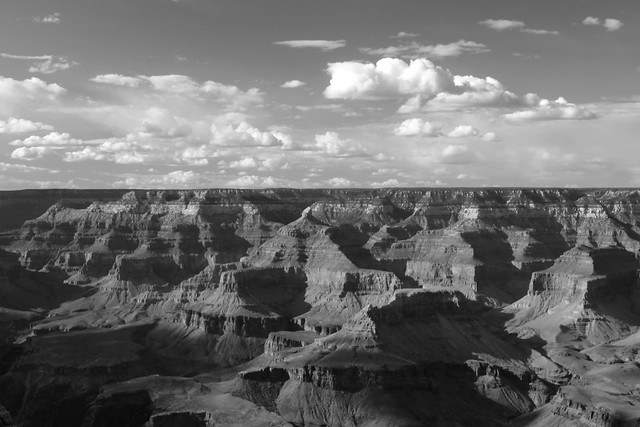
Grand Canyon from Mather Point - taken Sept 2011.

Thursday, 22 September 2011

Mathematics


The Genius in my Basement by Alexander Masters


Back when I was reading all of the World Book Night books I discovered, and was blown away by, Stuart: A Life Backwards by Masters. A couple of months ago, when reading through publisher catalogues I saw that he had a new book coming, it instantly went on reserve in the library.

The book arrived and I duly put aside everything else I was already reading to start this one. It wasn't the joyous read I was expecting.

Again Masters has written a biography about a person who isn't a typical subject for a book. Simon Norton was Masters' landlord and a friendship grew up between them:
One of the greatest mathematical prodigies of the twentieth century stomps around the basement in semi-darkness, dodging between stalagmites of bus timetables and engorged plastic bags. He eats tinned kippers stirred into packets of Bombay Mix. Simon is exploring a theoretical puzzle so complex and critical to our understanding of the universe that it is known as the Monster. It looks like a sudoku table - except a sudoku table has nine columns of numbers.

The Monster has 8080174242794512875886459904961710757005754368000000000.


I am not sure if it is because I don't understand the maths (confession after the 3rd chapter dedicated to the Monster I skipped those bits), if is because the subject isn't actually that interesting or if it is because the book seems to be too much about Masters rather than Norton, but I found the book a slog.

I'm not totally put off reading Masters' next book - if he writes one - but I won't be looking forward to it with such excitement. That makes me sad because I really did find Stuart a gem.

Friday, 15 October 2010

Christmas must be coming...

...the shops are full of s'lebrity autobiographies!

I've just walked through the city centre and while I wasn't actually shopping I couldn't help but look at the bookshop window displays. Even without looking at a calendar I could tell we were in the run up to the PGP* - the posters and windows were full of celebrity (auto)biographies.

All of them looking the same.

Last year the look was sitting down head on arms, this year it is standing up laughing.

I like biographies and autobiographies, perhaps I am just a nosy person but I love reading about other people. Sometimes I wish I lead the same sort of exciting lives as others do, but most of the time I am pleased that I don't.

I'll read a biography at any time of the year if I am interested in a person and I really don't understand how the autumn has become synonymous with (auto)biography. You only have to look in the charity shops (or work the refund desk in a bookshop) in January to know that these books are often unwanted gifts given by desperate family members. I've come to see them as the book equivalent of the bunch of flowers from the petrol station!

The other problem is that as the autumn is considered biography season the ones I want to read are also published at this time of year, but as the subjects aren't as 'sexy' or 'bankable' the books get lost, don't do very well and then publishers don't take risks on these more eclectic biographies and each year there are more celebrity memoirs and less interesting ones.

The biography that I am reading at the moment is Storyteller, The Life of Roald Dahl by Donald Sturrock.
It is a hefty tome and one I am dipping in and out of rather than racing through. I'd always known that Dahl wasn't your typical children's author and that he had a dark side but this book is wonderfully balanced, all sides of Dahl are written about. I think my favourite part so far has been where Sturrock compared Dahl's real life to the account he gives in his two volumes of 'autobiography'. I love Boy and Going Solo and deep down I always knew that were more likely to be a heavily fictionalised account of Dahl's life but the genius of this biography is that I can still love these two books whilst also knowing the truth. Storyteller whilst being honest isn't a hatchet job and it is still okay to love Roald Dahl's books.

There are a few more biographies I want to read being published this autumn but all I know is that they aren't of celebrities and they won't all look identical.


*PGP - Primary Gifting Period. I've loved this term for Christmas ever since I heard Bill Bailey use it.