Tuesday, 29 March 2022

Reading in the time of Covid


Well after two years avoiding Covid, being super cautious, working from home, wearing masks and being fully vaccinated our luck finally ran out and we both caught it.

Luckily we weren't too ill but at the very start when I found my concentration shot and my inability to read/remember what I'd read I was taken back to the months after my brain hemorrhage and it wasn't very pleasant at all.

My (fortunately temporary) inability to read doesn't seem to have affected my ability to buy and acquire books and the postman has been a little busy. The good (?) thing is that post Covid I am still really suffering from fatigue so I'm not feeling too guilty about curling up on the sofa after work and just reading.

Also helping to relieve the guilt is knowing that all of the books I've brought are from independent publishers and ordered through independent bookshops!

I have now finished Lesley Parr's When the War Came Home as recommended to me by Kentishbookboy's mum and I though that this was a brilliant read - it was so nice to read a book about the First World War that wasn't just about the fighting but had the focus on what came next for those returning from the front and those who'd held everything together on the home front.

Next up as a recommendation from Kentishbookboy is When The Sky Falls by Phil Earle which has made it on to the short list for lots of book awards, including the 2022 Yoto Carnegie Medal. I have been warned I'll need tissues for this one so perhaps I'll save it until I'm fully recovered!


Monday, 21 March 2022

Micro Review 57


Heritage by Miguel Bonnefoy, trans. Emily Boyce (Gallic Books)

Bonnefoy has managed something incredible in Heritage - a sweeping, multi-generational, family saga told in just 200 pages. It also repeatedly takes you by surprise, the blurb for the book is also a masterclass in understatement:

A winegrower ruined by the Great French Vine Blight takes his one surviving vine stock and boards a ship for California. But the new life he has in store is not the one he had imagined – taken ill aboard ship, he is forced to disembark at Valparaíso, where a misunderstanding at the customs post finds him rebaptized after his birthplace, Lons-le-Saunier: the Lonsonier family is born in Chile.

Making the journey in reverse, his sons return to defend the motherland in 1914, and the ghosts of the war live on across the Atlantic, in a house with three lemon trees and a garden filled with birds, for years to come.

It is only in the very last paragraph of this are you given a hint that there is more to the book than a simple family saga:

From the depths of the trenches to the soaring peaks of the Andes and the shadow of dictatorship, the personal stories of the Lonsoniers collide with key moments in a century of global history, painting a vivid picture of what is both gained and lost through migration. 

I confess that I was lulled in to a false sense of security by the first two thirds of the book, it was a good read but with the exception of a few magical realism flights of fantasy I thought it was 'just' another multi-generational family book - all be it one looking at WW1 & WW2 from the point of view of the colonies.

Then there comes the last part and boy was that an eye opener and shocking read - I knew a little of Chile's history but this packs no punches.

Thanks to the publisher for the advance copy of the book (which I was under no obligation to review), it is published on 14th April and is well worth a read. 

Monday, 14 March 2022

Micro Review 56


Lessons in Chemistry by Bonnie Garmus (Transworld Publisher/ Net Galley)

After seeing a lot of chatter about this book on Twitter I was really pleased to be approved for an advance copy on Net Galley and it really didn't disappoint - in fact it is already a contender for being one of my top 2022 reads.

Set in the 1950s and 1960s it follows the story of Elizabeth Zott and her family. Nothing about Elizabeth is conventional and this definitely isn't a nostalgic look back at the 1950s by any stretch of the imagination! 

Elizabeth is a woman ahead of her time in so many ways, and while at first you think that this could tip in to the Eleanor Oliphant genre of books it really doesn't. 

It is about making it as a woman in a man's world, being true to who you are, love, experimentation, family and bravery. Some reviews have said they couldn't find a likeable character in the book but I didn't find that - I loved them all and laughed/cried my way through it. What made me cross is the opposition & discrimination Elizabeth faced in every area of her life and how little this has changed in the 50 years since the book's setting.

Lessons in Chemistry is published on April 5th and I recommend reserving it at your local library (or preordering) as soon as possible


Tuesday, 8 March 2022

Micro review 55


Nisha's War by Dan Smith (Chicken House)

Kentishbookboy and I (plus his mum & nan)  have been talking books again and recommending lots of titles to each other, we've also been loaning books around the family and it does feel wonderful to be able to catch up in person and talk about them.

I have my sister's copy Lesley Parr's When the War Came Home about to reach the top of my TBR pile and the last time I was in Kent with them all KBB lent me his prized (signed) copy of Loki: A Bad God's Guide to Being Good by Louie Stowell. This loan came with conditions however as I had to read it while in Kent and under no circumstances could I bring it back to Norfolk to finish. (It was a fabulously funny book and I did fit it in around other family activities).

The book I added to the mix was Nisha's War by Dan Smith a book set during the Second World War. This one came with a difference however as it was partly set in the Far East theatre of war, during the  invasion of the area by the Japanese at the end of 1941/ start of 1942. While being written from a child's point of view the horrors of this campaign are not soft soaped and it was an emotional read.

The other thing I liked about this book was the inclusion of non white characters - Nisha's dad was white British but had married a local woman while he was working in the Far East. There is a lot of curiosity about Nisha's colour and some racism/colonial ideas expressed towards her Amma but no overt racist behaviour on their arrival back in England - I hope that is how such refugees would have been treated but I have my doubts.

Amma and Nisha make it back to England on an evacuation ship and the story opens with their arrival at Nisha's grandmother's house, which is not very welcoming. Slowly the story unfolds and we learn more about the experiences of the family in Singapore and why the family house is so rule bound and forbidding.

There is also a ghost story/mystery element to the book which marries the plot together nicely, without being too off the wall. It is a book about hope, friendship, and reconciling yourself with the past - whilst definitely being a children's book. 

It is hard to discuss the book without any spoilers and I think coming to it knowing just the barebones is ideal. I saw it being mentioned on Twitter to coincide with the 80th anniversary of the Fall of Singapore and I was drawn to it because of the unusual wartime setting - the war in the Far East is so often overlooked that anything using this as a plot is going to appeal to me.

Tuesday, 22 February 2022

Indulgent Reading


Longterm blog readers will recall that pre pandemic Mr Norfolkbookworm and I often have a winter holiday around now and spend a week somewhere warmer than Norfolk. Our main activities were reading, sleeping, eating, reading, gentle exploring, and reading some more.

We're still not comfortable enough to travel as yet but I have just had a week off and I have spent a lot of it reading, and rather than reading for forthcoming projects I have spent the time revisiting old favourites as well as some good old romantic fiction.

First up was a reread of Eva Ibbotson's Journey to the River Sea and I was so pleased that it did live up to my memories. In many ways is it a very old fashioned tale, along the lines of Nesbit or Hodgson Burnett, but at the same time is as a fresh and modern as anything else being written for this age bracket. Thanks to Net Galley I have just been granted access to the official sequel, Escape to the River Sea by Emma Carroll, and I will be starting this very soon!

A new book next and Cressida McLaughlin's The Staycation. This was just what I needed after a couple of heavier reads and unlike most of Cressie's books this is a standalone novel published in one go, rather than in monthly instalments and then as a full novel which is how I've read her previous books. While the overall plot of this book was clear from the outset it was just how delightful the journey to get there was that made this such a great read. And yes the pun is intentional! My favourite part about this book was the descriptions of the British locations - I knew them all and they were spot on, I felt like I was able to follow Hester and her friends completely as they roamed London and Norfolk.

A reread and a new book made up my last two books - Rachel's Holiday and Again, Rachel by the wonderful Marian Keyes. Looking back through my reading journal I can see that I read Rachel's Holiday back in 2005, and after that all of Keyes' other books. While I could remember the general gist of the book I thought that a reread was a good idea as Again, Rachel was going to be a direct sequel (although set 20-ish years after the first book). Both were brilliant.

Reading these two books (and if I'm honest The Staycation too) reminds me of why I get so cross the way  that this genre of books is dismissed as 'romantic fiction' or 'women's fiction.' The topics covered in Keyes' books don't make easy reading, although the writing makes them pure page turners, and the plotting is so tight it puts a lot of thrillers (or men's fiction) to shame. They are also funny - oh another genre that is dismissed all too often...

But as I'm typing this I can see that I have brought into this narrative. While I read quite a lot of 'women's fiction' I do tend to only review the more literary end, and the fun books like the ones mentioned I do only include in holiday round ups or under the heading 'indulgent reading.'

I think that because I don't review anything like all of the books that I read on my blog I do neglect to mention the books that are like a comfy sofa and a hot cup of tea. I need to start talking about the books that make me happy as well as the ones that make me think, that take me by surprise or that challenge me. I've never hidden the fact that I read and enjoy kidlit why don't I champion romantic/comic/women's fiction in the same way?

I'm too late for a New Year's resolution (and even a Chinese New Year's resolution) but I will try to do better.

Sunday, 20 February 2022

Micro Review 54


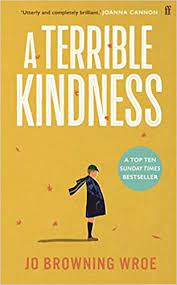
A Terrible Kindness by Jo Browning Wroe (Faber)

I'd seen and heard this book being talked about a lot at the start of the year and each time I heard about it I became more intrigued. 

At first I thought that a book about an embalmer who helps with the emergency response after the Aberfan disaster just didn't seem like it would be for me but I added it to my I want to read these books list regardless and then entered a Twitter competition run by @TwoFondOfBooks.

I was lucky and won a signed copy of the novel and last weekend with iffy weather and an under-the-weather husband changing our plans I curled up with the book and didn't really surface until I'd read it all!

It isn't an easy read in many ways, the topics it covers are (occasionally) bleak but the writing and characterisations are so good that the bleakness is balanced with light and humour. The non judgmental narration along with the message of acceptance was also refreshing and made a nice way to keep the focus on William's story.

William himself is an odd character and at times I wanted to reach in to the book and give him a good shake but that is again testament to the writing in that I found him to be so real.

The other delight with the book was Browning Wroe's accuracy in describing locations - all too often you can be pulled out of a book when a description of something/somewhere you know is wrong but the Cambridge of this book is spot on!

I can see why this book is being talked about everywhere and I hope it continues to do well and features on at least some of the literary prize lists this year.

Thanks to the Two Fond of Books team, Faber and Jo Browning Wroe for my signed copy as a prize- you were all right and I loved it!

Wednesday, 16 February 2022

Micro Review 53


The Personal Librarian by Marie Benedict & Victoria Christopher Murray (Penguin Random House)

This was a book I got for Christmas after seeing it mentioned in lots of different places - I mean a book about a librarian specialising in rare, antiquarian books was always going to pique my curiosity!

The book is the story of J. P. Morgan's private librarian and how between them they created one of the most interesting private collections of books (and art) and then made them accessible to the public.

While this story is fascinating in itself there is another strand to the story in that Belle, the librarian, is in fact passing as white due to her family's light skin tone. Her father was the first Black graduate from Harvard and was very prominent in the integration movement in the late 19th and early 20th centuries. In having a main character that crossed into both communities allowed a lot of history to be told without ever descending into bald exposition. I found it profoundly sad that society has not progressed as much in the past 100 years as we'd like to think as many of the events could (and probably do) still happening today.

While I really enjoyed the novel and how all of the story wove together I did find myself wishing that it was a little more of a biography with slightly less of the imaginings of Belle's romantic entanglements. I will now be looking out for other books about her and her achievements.

One thing I did like about the book was the openness of Marie Benedict as she realised that by being a white author she couldn't authentically tell Belle's story and so worked with Victoria Christopher Murray to create a more rounded book. This co-authorship worked wonderfully and at no point could I pick out one voice from the other - it was just a good book.

In that way that sometimes happens the theme of 'passing' has cropped up in a few other things I've come across recently, most noticeably in the film Passing which is nominated for several BAFTAs next month and I do recommend both the film and The Personal Librarian for an insight into pre-WW2 New York society.

Wednesday, 9 February 2022

Micro Review 52


The Betrayal of Anne Frank by Rosemary Sullivan (Harper Collins)

Long term followers of my reviews know that books about the Holocaust feature reasonably regularly in my reading. It has been well over 30 years since I first read the The Diary of Anne Frank and since then I've read quite a few books about her, the helpers and her family but I've never been obsessed with knowing who did betray those in the Secret Annexe.

This book treats the events of August 1944 as a cold crime and a team of researchers, historians, computer programmers and criminologists is formed to work through as many documents and sources as possible to try and work out who was ultimately behind the arrest of the Frank family and the others hiding with them.

Systematically the team work through different theories and show all of their research as they exonerate (or not) those who have been named as possible betrayers over time. In the main each strand is followed from start to finish which I really did like as theories didn't get confused, and with so many names to remember it didn't become overwhelming.

This choice of narrative style did however make me think that the chapters were each written as podcast chapters as at times they did feel a little cliff hanger-ish and overly dramatic.

The book has proved to be controversial with the ultimate reveal of who this team think did betray those in hiding, and publication has been stopped in Holland. 
The team do seem very convinced that they have cracked the case but I think I agree with the critics. For me it felt that they'd decided 'who dunnit' and worked all of their research to show this. I felt that some of the other threads were dismissed as being too flimsy yet the one that they fixed on didn't seem to have any more definitive evidence than the others.
 
The team are also always very clear to say that none of us in 2022 can understand the pressure those in occupied Holland were under, and we can't judge their actions by today's standards. Who knows what any of us would do to survive, or to ensure that our families did?

I'm pleased I read this from a curiosity point of view but I don't think it is the definitive solving of the case that the authors would like it to be. It is also quite telling that they were not given permission to quote from any of the original documents/diary or from any correspondence between Otto Frank and the other helpers.

Wednesday, 2 February 2022

Micro Review 51


I, Mona Lisa by Natasha Solomons (Cornerstone)

I love books with interesting narrators and as this one is told from the point of view of the painted Mona Lisa I was quickly drawn in.

The conceit is that Da Vinci was such a skilled painter that he actually created a sentient being with the Mona Lisa and so this book is actually her autobiography.

This Mona Lisa was firmly in love with Da Vinci and the bulk of the book is her recounting her life with him during Renaissance Italy and France. After his death we hear smaller parts of what happened to her/the painting in pre Revolutionary France, during her theft/kidnap at the start of the twentieth century and then how she was kept hidden from the Nazis during World War Two.

Because this Lisa had few people to talk to (exceptional artists/art lovers can also hear her, as can one other painting by Da Vinci) during these latter historical periods there is less detail in them and I did want to know more about them in a historical sense.

Solomon's Mona Lisa is quite a snob, very scathing and acerbic and also very unimpressed with most of the people who came to see her through history. At the same time she is quite amusing and her view point on history is different from other historical fiction set in similar time frames (such as The Agony and the Ecstasy by Irving Stone).

I feel that I would be one of the people that Mona Lisa would disparage as when I did see the painting in Paris she was smaller than I expected and hard to see because of the crowds, I never got close enough to see her in detail and failed to fall under her spell. The room was full of people trying to take selfies with her even before the camera phone became ubiquitous. I was much more impressed with the picture she was looking at...

Many thanks to Cornerstone and Net Galley for my advance copy of the book, it is published later this month.

Thursday, 27 January 2022

Micro Review 50 (Holocaust Memorial Day)


Maman, What Are We Called Now? by Jacqueline Mesnil-Amar, trans. Francine Yorke (Persephone Books)

This volume from Persephone Press has been sitting on my shelf for a while but it has been worth the wait.

The titles of the book comes from the author's daughter as the family were French Jewish and in hiding during WW2, although unlike so many they were hiding more or less in plain sight and together for a lot of the war. The first part of the book covers the last 5 weeks of the German occupation of France and comes in the form of Mesnil-Amar's diary from these weeks - starting when her husband is arrested and put on the last transport from France to the East, and the Concentration/Death camps.

The excitement (and fear) caused by the approach of the Allied Armies on Paris is heightened by fear for Andre and this is all pored out into the diary entries, along with some reflection on the past decade. It was very interesting to get an eye witness account from inside Paris as the German's left, and also a reminder that whatever the victors would like you to believe not everyone suffered under the occupation and that although there were plenty of brave people not everyone was in the Resistance...

The diary is a breathless read, but for me the book becomes even more interesting in the final part where Mesnil-Amar's reflections on what came next for the displaced Jews of Europe, and the children who had been successfully hidden but now had no surviving family. Her meditations on how deluded French Jews had become before 1940 are also fascinating. 

I've read many books set in WW2, and many books with the Shoah as the main theme, but I think this is an excellent addition to my personal canon. I don't think I've read a book, by a survivor, that covers the before, during, and after in such a clear sighted way.

Sunday, 16 January 2022

Micro Review 49


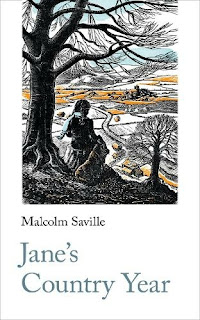
Jane's Country Year by Malcolm Saville (Handheld Press)

This book was on my extensive book wish list and seeing a friend talking about it on Facebook nudged me into placing an order straight away. The book isn't officially published until 18th Jan but Kate at Handheld Press dispatched it pretty much as soon as I clicked on the buy button.

Bex said she thought I'd love the book and (spoiler alert) she wasn't wrong.

Jane's Country Year is a little like a novel version of the wonderful What to Look for in... series from Ladybird that I fell in love with last year.

The book is set in 1947 and Jane is sent to live with her aunt and uncle on a farm to recuperate from a serious illness, the book then is split in to 12 chapters - one for each month of her stay.

Unlike many books set in this era with a similar theme Jane settles into country life well, she isn't a snobbish 'town mouse' disparaging everything rural. She is keen to learn, and make friends with everyone but every so often small plots (upset at killing pests, fear of shadows etc.) reminds the reader that she isn't a local. Her homesickness is also sensitively handled which was a nice change from usual tropes.

At times the plot is a little didactic and occasionally Saville does fall foul of the country yokel stereotype but on the whole I loved this book, especially with the fascinating introduction. I wish I'd had the resolve to read along just one chapter a month but it was soooooo good I couldn't help myself and just had to read it all in one go!

Saville was a prolific author but this is only the second of his books I've read and I will be looking for more by him - especially if they are set in locations I know (like Redshanks' Warning) or have a natural history theme like this one.

This is the 3rd book I've read from The Handheld Press and I am already looking at their beautiful catalogue and website working out what to try next...

Tuesday, 11 January 2022

Micro Review 48


The Kingdoms by Natasha Pulley (Bloomsbury Publishing)

A very dear friend recommended this book to me and I was more nervous than usual in starting it. While we are old friends and share lots in common our taste in books/plays doesn't always correspond. In general if I love a play she is ambivalent (or really didn't like it) and vice versa so a lot was riding on this read.

I'm pleased to say that I was drawn in from the start and begrudged all the time I had to spend at work and not reading it.

I'm at a loss to explain the book, it starts with a man getting off a train and losing all his memories, a lighthouse, alternative histories and even time travel...

The publisher's blurb also doesn't give too much away: 

Come home, if you remember. The postcard has been held at the sorting office for ninety-one years, waiting to be delivered to Joe Tournier. On the front is a lighthouse - Eilean Mor, in the Outer Hebrides. 

Joe has never left England, never even left London. He is a British slave, one of thousands throughout the French Empire. He has a job, a wife, a baby daughter. But he also has flashes of a life he cannot remember and of a world that never existed - a world where English is spoken in England, and not French. And now he has a postcard of a lighthouse built just six months ago, that was first written nearly one hundred years ago, by a stranger who seems to know him very well. 

Joe's journey to unravel the truth will take him from French-occupied London to a remote Scottish island, and back through time itself as he battles for his life - and for a very different future.

All of this vagueness works in the books favour, and the confusion I experienced while reading the book definitely mirrored Joe's which made for an unexpectedly immersive read. 

I was lucky enough to get another Natasha Pulley book as a 'Secret Santa' present and I am looking forward to diving into her back catalogue. There is some incredible violence in this book, and at times it is shocking but at no point did I want to stop reading. 

Monday, 3 January 2022

Review of the year part 3


Top Kidlit & YA books read in 2021

Despite everything that was thrown at us all in 2021 Kentishbookboy and I have continued to share books with each other and there's nothing more I like than getting a message from him (or his mum) saying how much they love a book, and although only a couple of shared reads have made my final top 10 all of the books he suggested were great and I think that we are living in another golden age of children's literature.

The books that made my list in alphabetical order are:

  • Medusa by Jessie Burton
  • Darwin's Dragons by Lindsay Galvin
  • Julia and the Shark by Kiran Millwood Hargreve & Tom de Freston
  • How to Be Brave by Daisy May Johnson
  • Last Night at the Telegraph Club by Melinda Lo
  • The Swallows' Flight by Hilary McKay
  • Wishyouwas by Alexandra Page
  • Arctic Star by Tom Palmer
  • Swarm Rising by Tim Peake & Steve Cole
  • Amarantha by Elena Traina

Sunday, 2 January 2022

Review of the year part 2


Top Non-Fiction read in 2021

As the New Year Bank Holiday is three days long this year I feel fully justified in spreading my 'best of the year' lists over three days too!

Today non-fiction books take centre stage, I wasn't always in the mood for fiction during 2021 and thanks to the great non-fiction out there I never quite lost the reading mo-jo. In a year that was so strange, and with so little travel possible, I definitely roamed the world via the written word.

In alphabetical order my top reads were:

  • Come Fly the World by Julia Cooke
  • One Woman's Year by Stella Martin Currey
  • The Stubborn Light of the Things by Melissa Harrison
  • Minarets in the Mountains by Tharik Hussain
  • Burning the Books by Richard Ovenden
  • Light Rain Sometimes Falls by Lev Parikian
  • Slow Road to San Francisco by David Reynolds
  • The Lost Cafe Schindler by Meriel Schindler
  • Hidden Hands by Mary Wellesley
  • Freedom by Lea Ypi

Saturday, 1 January 2022

Review of the year part 1


Top 10 fiction novels read in 2021

Looking back on my reading diary for 2021 I had a better year of books than I first thought, and indeed I couldn't narrow it down to just 10 books so I am creating 3 lists this year - one for fiction, one for non-fiction and one for children's/YA books.

I did completed two of my own challenges, reading all of the 2021 World Book Night titles and then reading all of the books long listed for the 2021 Wainwright Prize. I also got better at abandoning books - actually abandoning them rather than kidding myself that I'd come back to them!

I was also pleased to see that 60% of the books read were by women and that I read more than 2 translated titles a month.

Anyhow, in alphabetical order, here are my top 10 fiction reads from this year:

  • Civilisations by Laurent Binet (translated from the French by Sam Taylor)
  • Which Way? by Theodora Benson
  • The Sentence by Louise Erdrich
  • The Lost Daughter by Elena Ferrante (translated from the Italian by Ann Goldstein)
  • The Apollo Murders by Chris Hadfield
  • The Island of Trees by Elif Shafak
  • Kololo Hill by Neema Shah
  • O, The Brave Music by Dorothy Evelyn Smith
  • Project Hail Mary by Andy Weir
  • Still Life by Sarah Winman


Friday, 17 December 2021

Pre Christmas Blogging Break

Micro Review Goals

I am hoping to get to 50 Micro Reviews by the end of the year but what with Christmas preparations, reading projects and trying to make the most of any good weather on these short December days, I might not get there...

However I am still reading lots, and looking through my reading diaries ready to pick my top books of the year. Thanks to Net Galley I may also have already read one the books that makes next year's top books!

In the meantime I am adding photos to my Flickr stream and the most recent pictures there are from our midweek trip to see the seal colony at Horsey. For wildlife lovers I promise these were all taken from a distance with a long lens (and when we could get a little closer this was all monitored by the amazing Friends of Horsey Seals volunteer wardens).


Thursday, 2 December 2021

Micro Review 47


The Edelweiss Pirates by Dirk Reinhardt, trans. Rachel Ward (Pushkin Press)

There are lots of books, fiction and non, about WW2 resistance movements but not that many of them are about German resistance. I knew that there were some as we read about Die Weisse Rose group as part of our German A-level course, and there is plenty about the July 1944 plot to kill Hitler.

What about the rest of the population - obviously living in such fear of reprisals from the SS and/or Gestapo made any form of resistance hard but there must have been some...

Reinhardt focuses his novel, around the real 'Edelweiss Pirates' who were concentrated around the Rhineland area, and much of his story is set in Koln/Cologne. The Pirates were not an organised group, nor were they highly political, just groups of people who didn't agree with the Nazis and refused to join the Hitler Youth or work for the Reich. They were often from the poorer areas of the towns and cities and not really benefiting from the so called prosperity of the Reich.

The story is simply told, a man meets an older man at his grandfather's grave and after some cryptic remarks in the cemetery they fall into a friendship and Josef Gerlach shares his diary from WW2 with Daniel and slowly we learn all about the Edelweiss Pirates and their actions during the war.

I loved reading a new history of the War, and the fictionalised story (based on detailed research) was shocking and eye opening, as well as being beautifully translated by Ward but...

I have two issues with the book as a whole.

1) The style of the diary - it repeatedly stressed that Gerlach and the other have had very little good schooling but the style was flowing and felt incredibly literate. I also can't see that in the circumstances he would have had the time and materials to write such a detailed diary. I'd have believed it more if it had been rough notes that had been written up immediately post war. 

2)Who this book is aimed at. The back of the book lists Pushkin's children's books, including some of their books which are definitely for a much younger audience than this book. Retailers list it with other YA books, and Norfolk Libraries (where I borrowed my copy from) also classify it as teen which makes more sense but even then I think that it is for an older audience. Classifying it as YA also means that lots of adults won't come across it too...

On the whole a book I liked but didn't love but am glad to have read.


Tuesday, 30 November 2021

Micro Review 45 and 46 (non fiction November)


Minarets in the Mountains by Tharik Hussain (Bradt Publishing)

I'm always on the lookout for new books to try and this one really stood out for more when the Baillie Gifford Prize for non-fiction was announced earlier in the year.

It took me a while to get around to the book but I'm so pleased that I did as I learned so much from reading it. Hussain takes his family on a long summer holiday around parts of the Balkans looking to find Muslim Europe.

To my shame I had no idea how much history there was in the region, I knew that large parts of Spain had been Muslim but not that this empire went so much further. While I knew that there were  dreadful atrocities committed against Muslims during the Bosnian War I had no idea of the deep history behind this persecuted population.

This book could so easily have become maudlin, but Hussain and his family find lots of light in present to balance the darkness of history and when travel is possible again then there are some new places I'd like to visit.

In that way reading often has this book connected very well with one that I'd read a few weeks before:


  Free by Lea Ypi (Penguin Books)

(coincidentally also on the Baille Gifford longlist & shortlist)

This is an account of life in Albania just as the communist regime fell apart in the 1990s. Ypi was only a child at the time and fully committed to the teachings and propaganda that she was taught at school.

In the west we are so used to the idea that the removal of communism was the best way forward that we don't hear much from the people who experienced a very real sense of loss after their way of life failed. Ypi's parents were very careful to ensure that she had no idea of their past and actual political leanings that you can feel her entire life fracture along with the Albania she knew.

Albania's transition to a democratic nation was not smooth, and again I don't think we in the west ever heard the full story so much of Ypi's story was new to me and incredibly eye-opening.

I do love how sometimes books you read can have unexpected conversations with each other, and the the reader. 

Saturday, 27 November 2021

Micro Review 44 (non fiction November)


Hidden Hands: The Lives of Manuscripts and Their Makers by Mary Wellesley (Quercus Publishing)

Our recent trip to Winchester and the chance to see the incredible Bible (and other books) they have in the Cathedral re-sparked my interest in early books and manuscripts. When not working from home I am lucky to work in a library with its own incredible archive and early book collection. It has always felt a privilege to have the chance to see such beautiful works with ease. (You can read more about the wonderful Norfolk literary archives here: Unlocking the Archive and more details about the Norfolk Heritage Centre here.)

Hidden Hands couldn't have been published at a better time for me!

Wellesley takes us through all different types of manuscripts and we learn about the people who wrote, illustrated and commissioned some of the most beautiful books to be found in the UK.

To make this book even more ideal for me there's a lot of focus on works that come from Norfolk!

You don't need to be an academic to read this book, just have an interest in history, books and art - it made me want to dig out my calligraphy books and pens again that's for sure! There are some wonderful little details in many of these manuscripts and I spent nearly as long poring over the colour plates as I did reading the book.

I was so pleased to find a copy of this book from an independent publisher in an independent bookshop on National Bookshop Day - and even more pleased I treated myself to the gorgeous hardback rather than waiting for the paperback.

Friday, 12 November 2021

Non Fiction November


Without really meaning to I appear to be bang on trend in 2021 as November has been renamed Non Fiction November by the Federation of Children's Book Groups.

With only a very few exceptions this month I have found myself unable to settle to any novels but I have finished several excellent non fiction titles, as well as having a few more on the go.

I think that the joy of non fiction is that often each chapter can be read as a standalone so on days when I am tired or unable to settle an interesting chapter is just the right length.

Usually when I get like this I turn to short stories as well but I've currently finished all of the anthologies of these I have around the house so I will also have to look out for more of these - any recommendations gratefully received and then perhaps next month I can rebrand December reads as "short fiction for short days" - not as catchy but I'll work on this!

Thoughts will be forthcoming on some of the non fiction I've read and enjoyed but for now I need to go back to the current book Minarets in the Mountains and continue travelling around part of the Balkans without leaving the sofa!