Showing posts with label World War Two. Show all posts

Saturday, 14 February 2026

Truth in fictional tropes


Finds from the archives.

When I'm not at work, reading, or out taking photos I also volunteer at the Royal Norfolk Regimental Museum one morning a week and at the moment I'm helping to add items to the catalogue. The curator is learning not to give me too many books or documents to work on as I do end up reading it all and not actually adding the items to the system.

However over the last few weeks I've come across some real gems of items and they do tie into my love of historical fiction.

One of the tropes of fiction set in World War I is that a soldier survives an attack because the bullet hits an item in his pocket. I've certainly seen metal tobacco tins with dents in, and having seen the density of bibles that many soldiers carried I could certainly see one of them saving a life. I was always more skeptical of the books that see a life saved because of letters and/or a photo of a sweetheart being carried in a pocket.

However I now have to mentally apologise to all the authors whose books I've scoffed at as I have held proof that it could have happened.

An item I catalogued recently was a leather wallet which contained a selection of photos from home. The flap on the front of the pouch had a rip/hole in it, as did the front. Then the photos and cards in the pouch all had holes or rips - although these got smaller as I flipped through. Then I turned the pouch over and there was no hole at all - the letters had saved this soldier's life.

Four photos showing the damage to the item (the face of the sweetheart is obscsured)


Reading more information that came with this item it did say that the pouch protected the man from a piece of shrapnel rather than a bullet - which would explain the shape of the tear - and so I don't know if it would have stopped a bullet but some of the plot points in historical fiction no longer seem quite so unlikely.

The second recent find is a an actual book, and as someone who works in a library (and who frequents secondhand bookshops) it was something that was in such poor condition I wondered what was so significant about it that meant it needed saving and not binning...

And again the story that came with the item that revealed the importance

Three images of a very damaged book with rudimentary repairs


This is a copy of Kipling's Stalky & Co. and obviously well loved...in fact this book was owned by a Far East Prisoner of War during WWII. The book obviously didn't like the jungle conditions any more than the men did and the cover and pages are very fragile. 

The book was obviously important to its owner as he repaired it whilst in captivity using what looks like scraps of uniform and threads pulled from who knows where.
When you turn to the back of the book you can see why he was so keen to hold on to the book as he'd used it to record everywhere he'd travelled - either en-route to the Far East or while a prisoner - including the dates. This is fascinating reading as he lists every small movement he made where as so many records just list the big moves/locations men went through.
Diaries weren't encouraged by the Japanese and so keeping hold of his efforts to record everything was even more important, and risky. The more so when looking at the front of the book and seeing Japanese stamps in it - from which I assume that this was a book issued to him in one of the camps from a library or limited relief programme.

Again in fiction you often read of how Prisoners of War recorded their experiences and kept the information hidden and it can read as a bit far fetched but having held this book I will no longer be so skeptical.

I love having my assumptions challenged but so many in such a short space of time lead me to needing the last item I catalogued as it was all sending me mad and I really needed a guide...

A guide to the Deolali Camp - which is where we get the term Doolally from!


Thursday, 20 March 2025

Micro Reviews 15 and 16 (2025)


Agent Zo by Clare Mulley (Orion Publishing) & The CIA Book Club by Charlie English (HarperCollins)

Thanks to the Women's Prize for Non Fiction list I picked Agent Zo up from the library recently and was immersed in her (and Poland's) story of the Second World War and after. 

While we 'know' that Britain went to war in 1939 because of the Nazi invasion of Poland after this event very little made of Poland's war - a paragraph or two about the Warsaw Uprising maybe and possibly a mention of the horrific massacre at Katyn but that's about it. Once the Iron Curtain fell Poland disappears again until the rise of Solidarity and eventually the fall of Communism.

Agent Zo really fills in the gaps as well as adding so much more detail. In focussing on the work of the women's resistance movement we get a new view of war and perhaps a more honest look at the treatment of women in the SOE movement.

What was most shocking about this book was the way that Poland was treated towards the end of the war by 'Allies' and how this fed into the second half of the twentieth century and how Poland became one of the most repressive Communist states.

Which leads on nicely to English's The CIA Book Club which while it does cover some of the same history as Zo focuses far more heavily on the 1980s in Poland and how the CIA helped the resistance movement in Poland (and their supporters in the West) keep the dreams of freedom alive via the printed word.

This book wasn't quite as engaging as Agent Zo and at times read more like a thriller than an exploration of how powerful words are. However as some of the same people from Zo appear in this book it felt very much like a surprise sequel. It also rounded out the time covered in Mulley's book briefly - once Agent Zo had more or less retired - and showed how Communism in Poland was overthrown.

While both of these books cover the past there is a lot that the current world could learn from reading these - especially how carving up a nation without including that country in the negotiations - is a very bad idea with longer lasting repercussions than are even dreamt of.

If you only want to read one book about Polish history then I would have to say go for Agent Zo, but The CIA Book Club really does add to that story. 

Wednesday, 26 February 2025

Micro Review 11 (2025)


The Prosecutor by Jack Fairweather (Ebury Publishing)

While I have read a few books in the past couple of weeks most of them have been ok but nothing more, with one that needs a lot more thinking about before I write about it. There was also the awkward coincidence of me starting Pope Francis' autobiography on my tea break only to hear he'd been hospitalised by the time I had my lunch break...

However Jack Fairweather's The Prosecutor was a book that I found as gripping as any novel and one that taught me so much on a topic that I thought I'd possibly exhausted.

The book is all about Fritz Bauer, a gay Jewish German legal man who after surviving the Holocaust was horrified at the cursory way 'de-Nazification' took place in West Germany and how many prominent Nazis regained their positions in society - and government. He wasn't just horrified however - he decided to do something about it, including helping track down Eichmann and ensuring he faced justice. He also managed to challenge the specific wording of German Law so that he could actually put perpetrators of the horror on trial.

As well as Bauer's story we hear how former Nazis were reintegrated into the higher echelons of government, how they formed the backbone of West Germany and how the Western powers let this happen. It also covers the slow way that Germany was forced to face the atrocities of the Holocaust, but also shows how the seeds of denial (which are sadly growing once more) were sown.

I've read a lot about East Germany in the period 1945-1961 but this was the first book covering West Germany and once more it just shows how the victors get to rewrite history - I found the book chilling but fascinating and I really recommend it when it is published tomorrow.

Many thanks to Ebury for providing access to an advance copy of the book via NetGalley

Thursday, 14 March 2024

Micro review 4 (2024)


Safiyyah's War by Hiba Noor Khan (Andersen Press)

I read this book back last summer and really enjoyed reading it. It is  another book set in WW2 but this one had a different spin as while it was set in Paris during the Occupation it focuses on the resistance work undertaken by the Islamic community of the city and the help they provided to Jews trying to escape.

This is a book for children/young teenagers but it still packs one heck of a punch, and even with all the books I've read about WW2/Resistance/Occupation it brought a completely new dimension to this period of history.

At a time when tensions in the Middle East are once more in the news this book is a good reminder that cooperation between faiths is possible.

I'm really pleased that this book has been Shortlisted for this year's YOTO Carnegie Medal and longlisted for the Jhalak Children's and Young Adults Prize - it really deserves to reach a wide audience (and not just children).

Monday, 3 July 2023

Micro Reviews - connected books (10 & 11)


Changing the way we think about the Dutch experiences of World War Two

A few years ago I read and reviewed Bart van Es's book The Cut Out Girl which opened my eyes to another side of the Dutch experience in WW2, as I said then the prevailing feeling is that the Dutch had a good war, protected the Jews and stood up for the Nazis but this really isn't the case.

Nina Siegal's The Diary Keepers (William Collins) uses the extensive archives of WW2 Diaries held in Amsterdam to tell a rounded story of WW2 as people recorded at the time.

The book includes many voices but concentrates on diaries from a Nazi-sympathising Dutch policeman, an ardent  female Nazi party supporter, an ordinary factory worker, a Jewish woman working for the Jewish Council, a Jewish journalist held in Westerbork Concentration Camp for well over a year, and a Christian woman at the heart of a resistance ring who protected dozens of Jewish people.

With Siegal's commentary framing entries a much fuller picture of Holland between 1940 and 1945 this was eye opening, even for me who has read so much around the Holocaust. There's lots of balancing views given but the reader is left to draw their own conclusions overall - and who knows how any of us would actually act if we were in the same situation.

After finishing this book I was approved for a book on NetGalley called My Friend Anne Frank by Hannah Pick-Goslar (Ebury Publishing). Pick-Goslar was, like Anne Frank, a German Jewish girl who's family had moved to Amsterdam in the 1930s. She was good friends with Frank and lived next door to them- she is mentioned in several times in Anne's diary.


However this book is so much more than someone tagging on to Frank's fame. While Pick-Goslar did survive the war, and Belsen-Bergen, her account of her experiences is one of the most moving Holocaust accounts I've read and I think that it does the incredible story a disservice to market it in terms of being about Anne Frank.

It tied in so nicely with The Diary Keepers  as many of the people Pick-Goslar talks about in Amsterdam are also featured in depth is Siegal's book and both narratives help build a full picture of the choices people had to make and of how life was at the time.

Pick-Goslar's account of liberation from the camps and her physical recuperation was as gripping as her actual wartime life, and filled in more of the "what came next" narrative for me. I really hope that this book does become as important in the Holocaust memoir cannon as Anne Frank's Diary.


Tuesday, 18 April 2023

Micro Review 3 (2023)


A Complicated Matter by Anne Youngson (Doubleday)

I am always going to read everything that Youngson writes after the wonderful gift her Meet Me At the Museum gave me when I was so ill and I am so pleased to say that this one is just as good (possibly even better) than Museum.

I’ve read a lot of fiction and non fiction set in World War Two and yet in this book Youngson manages to introduce me to a completely new story from that time as we meet the women and children of Gibraltar who are forcibly evacuated from the Rock as a safety precaution while the men remain to work the essential port operations.

Their arrival and stay in Britain isn’t simple either, as they are first (disastrously) evacuated to French North Africa before coming to London where, despite their British citizenship, they are treated with some suspicion. Rather than being billeted in the country like most evacuees or held in large camps like many refugees they are housed in a hotel in central London which I found fascinating as it shows that no one really knew how to treat them. Their return to the Rock at the end of the war was also handled very differently from other evacuees and refugees.

Our main narrator is Rose and we follow her story closely through the war years as well as learning lots about life in Gibraltar and how society there was structured. Lots of ideas and themes are tackled in the book, but it isn’t an issue book, and throughout the story Rose remains a likeable character even in her fish out of water role.

I'd love to know if anyone else saw a parallel to one of my favourite classic novels - I can't say more for fear of spoiling the plot but it *isn't* Little Women!

The book has made me want to know more about Gibraltar and its wartime history from a non-military point of view and firmly places Youngson on my must read list.

Wednesday, 4 May 2022

Micro Reviews 62, 63 & 64


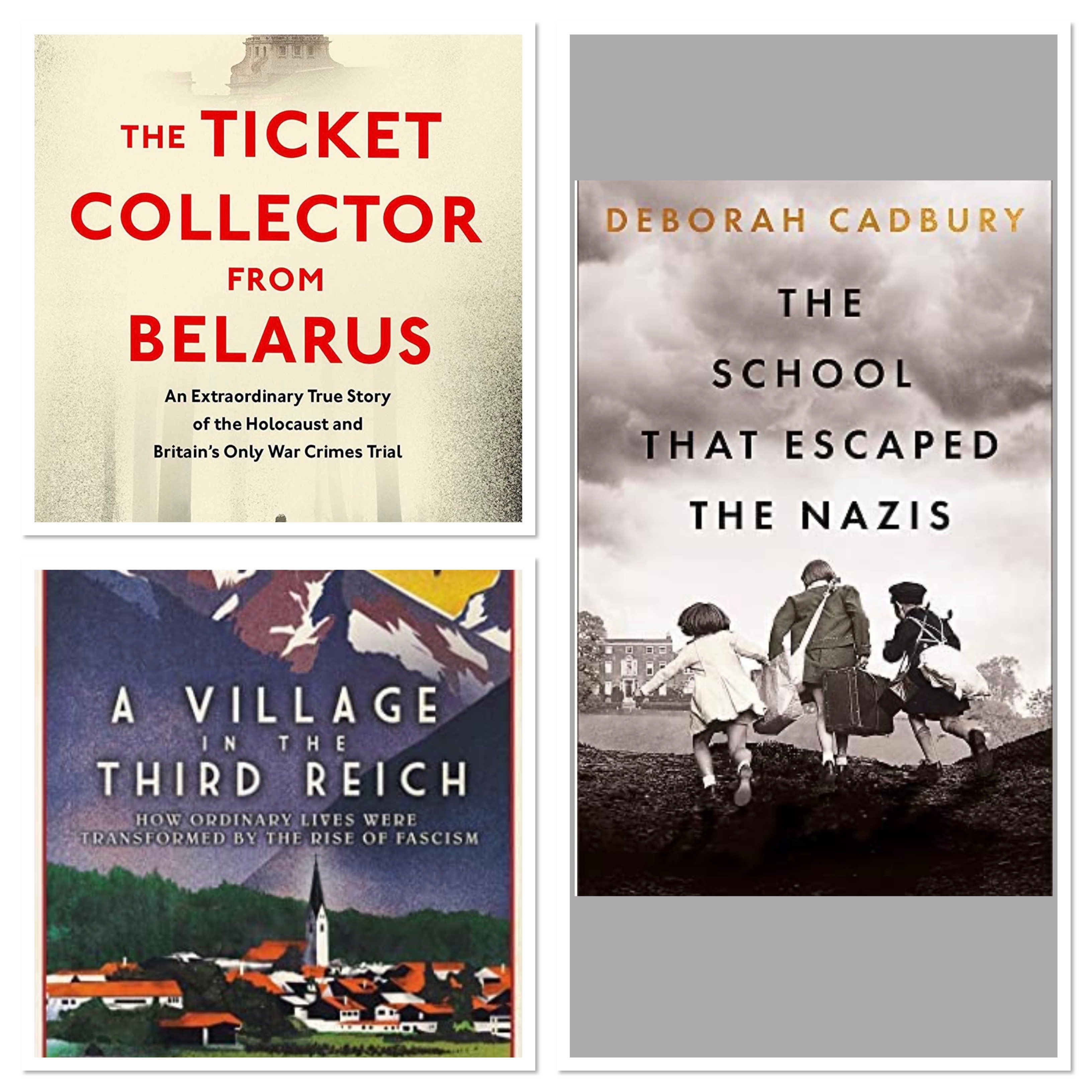
The Ticket Collector from Belarus by Mike Andersen & Neil Hanson (Simon & Schuster)


A Village in the Third Reich by Julia Boyd and Angelika Patel (Elliott & Thompson)


The School that Escaped the Nazis by Deborah Cadbury (Two Road)


In that way that seems to happen in my reading life I've recently read three books that connected in more ways than just the obvious WW2 setting.

The Ticket Collector from Belarus is an account on the only War Crimes Trial to ever take place in the UK and weaves a moving (and horrifying) tale of atrocities carried out by one Belarussian man on behalf of the Nazis. The details of the war period were supplied by Jewish survivors from the area, some of whom knew Sauwoniuk, and others who were directly affected by his actions.

I had no idea that there had only ever been on War Crimes Trial in the UK and the explanation of how it worked and the very precise legal wording and evidence that was admissible was as eye opening as the wartime stories.

The book also had added poignancy as thanks to border changes over the past 100 years the area in question is back in the news again as the current war in Ukraine is also taking place in this area.

A Village in the Third Reich also touches on some of the same themes as Ticket Collector. This is the biography of a rural village in Germany from roughly 1900-1950, and again a book I found fascinating as I read it, although slightly more controversial as I think about it afterwards.
Boyd attempts to be scrupulously fair in her account of the politics as they ebb and flow through the years and shows the insidious way Nazism did creep into every facet of life.

However in this attempt at fairness and balance I found that there was just a little too much excusing of people's behaviour and also the perpetuation of the idea that 'ordinary' Germans didn't know what was really happening. There was also a lot of justification of people with low party numbers not being the same as the 'bad' guys.

It was really interesting to focus on one village throughout the period rather than individuals but overall I'm left feeling that it was a bit bland and too safe - perhaps unsurprisingly as the author makes her home in the village.

The School that Escaped the Nazis also presented me with another strand of wartime history that I knew nothing about as it follows educator Anna Essinger who realised very early on into Hitler's reign that she needed to move her school out of the Third Reich and to provide a safe haven for her Jewish pupils, as well as those who's parents were marked as enemies of the Reich.

Against amazing odds she moves the school to England and builds a school that was far more like a family than place of education. She fought prejudice on all sides and was hugely instrumental in helping with the Kindertransport. Once war was declared there were more struggles for a German school in England, not least the internment of teachers and pupil and rationing.

After the war Essinger also took in survivors from Europe, whether they'd been in hiding or the Concentration Camps, as well as trying to trace any surviving relatives of her pupils and teachers. 

The book is interspersed with personal stories from the children she saved, and in that circular way of books one of these stories also touches on the locations mentioned in Ticket Collector.

This book was always going to be more emotive as it is filled with first hand accounts but of the three connected books this was definitely the best (if you can use such a word for the topic) and it was also the most hopeful as we look at how history does seem to be repeating itself in 2022.

Thanks to Norfolk Libraries for ordering in Ticket Collector and Net Galley for the 2 other books

Wednesday, 20 April 2022

Micro Review 61


 When the Sky Falls by Phil Earle (Andersen Press)

This one was another recommendation from Kentishbookboy as it was their family read a few weeks ago. I didn't know that much about it beyond that it has been shortlisted for (and won) lots of awards.

I am drawn to books set in WW2 and I was eagerly awaiting my library copy to come in when I got a message from my sister warning me that I'd need tissues by the end and to make sure I had them easily to hand...

I was so grateful for the warning as this book packed a huge punch and while I couldn't see that it could end any other way I was still sniffing gently (full blown sobbing) by the last page.

The book is about a troubled boy being evacuated to a friend of his grandmother's after his father is sent to France to fight. It is a reverse evacuation however as Joseph is sent into a city that is under sustained attack from German air raids. Mrs F is not your standard guardian and is trying to save the last few animals remaining in her family's zoo - including Adonis, the male silverback gorilla. Looking after dangerous animals at a time when they could be released from their cages by bomb damage brings a whole new level of dilemma and thought provoking points for discussion as well as making it an edge of the seat read.

There's so much covered in this book but it all works together and as with all the best books I wanted to know what happened to the characters after the last full stop.

I'm glad I got the warning about the ending of the book - and if books carried warnings then this one would have 5 handkerchiefs on the back cover, but also 2 laughing emojis as there's a lot of dry humour in the book. 

It is being recommended for fans of Michael Morpurgo and I'd agree with this - but it is definitely for the older end of his readership. I've seen that Earle has another book about WW2 coming soon but I think I'll have to recover from this one before reading that!

Wednesday, 9 February 2022

Micro Review 52


The Betrayal of Anne Frank by Rosemary Sullivan (Harper Collins)

Long term followers of my reviews know that books about the Holocaust feature reasonably regularly in my reading. It has been well over 30 years since I first read the The Diary of Anne Frank and since then I've read quite a few books about her, the helpers and her family but I've never been obsessed with knowing who did betray those in the Secret Annexe.

This book treats the events of August 1944 as a cold crime and a team of researchers, historians, computer programmers and criminologists is formed to work through as many documents and sources as possible to try and work out who was ultimately behind the arrest of the Frank family and the others hiding with them.

Systematically the team work through different theories and show all of their research as they exonerate (or not) those who have been named as possible betrayers over time. In the main each strand is followed from start to finish which I really did like as theories didn't get confused, and with so many names to remember it didn't become overwhelming.

This choice of narrative style did however make me think that the chapters were each written as podcast chapters as at times they did feel a little cliff hanger-ish and overly dramatic.

The book has proved to be controversial with the ultimate reveal of who this team think did betray those in hiding, and publication has been stopped in Holland. 
The team do seem very convinced that they have cracked the case but I think I agree with the critics. For me it felt that they'd decided 'who dunnit' and worked all of their research to show this. I felt that some of the other threads were dismissed as being too flimsy yet the one that they fixed on didn't seem to have any more definitive evidence than the others.
 
The team are also always very clear to say that none of us in 2022 can understand the pressure those in occupied Holland were under, and we can't judge their actions by today's standards. Who knows what any of us would do to survive, or to ensure that our families did?

I'm pleased I read this from a curiosity point of view but I don't think it is the definitive solving of the case that the authors would like it to be. It is also quite telling that they were not given permission to quote from any of the original documents/diary or from any correspondence between Otto Frank and the other helpers.

Thursday, 2 December 2021

Micro Review 47


The Edelweiss Pirates by Dirk Reinhardt, trans. Rachel Ward (Pushkin Press)

There are lots of books, fiction and non, about WW2 resistance movements but not that many of them are about German resistance. I knew that there were some as we read about Die Weisse Rose group as part of our German A-level course, and there is plenty about the July 1944 plot to kill Hitler.

What about the rest of the population - obviously living in such fear of reprisals from the SS and/or Gestapo made any form of resistance hard but there must have been some...

Reinhardt focuses his novel, around the real 'Edelweiss Pirates' who were concentrated around the Rhineland area, and much of his story is set in Koln/Cologne. The Pirates were not an organised group, nor were they highly political, just groups of people who didn't agree with the Nazis and refused to join the Hitler Youth or work for the Reich. They were often from the poorer areas of the towns and cities and not really benefiting from the so called prosperity of the Reich.

The story is simply told, a man meets an older man at his grandfather's grave and after some cryptic remarks in the cemetery they fall into a friendship and Josef Gerlach shares his diary from WW2 with Daniel and slowly we learn all about the Edelweiss Pirates and their actions during the war.

I loved reading a new history of the War, and the fictionalised story (based on detailed research) was shocking and eye opening, as well as being beautifully translated by Ward but...

I have two issues with the book as a whole.

1) The style of the diary - it repeatedly stressed that Gerlach and the other have had very little good schooling but the style was flowing and felt incredibly literate. I also can't see that in the circumstances he would have had the time and materials to write such a detailed diary. I'd have believed it more if it had been rough notes that had been written up immediately post war. 

2)Who this book is aimed at. The back of the book lists Pushkin's children's books, including some of their books which are definitely for a much younger audience than this book. Retailers list it with other YA books, and Norfolk Libraries (where I borrowed my copy from) also classify it as teen which makes more sense but even then I think that it is for an older audience. Classifying it as YA also means that lots of adults won't come across it too...

On the whole a book I liked but didn't love but am glad to have read.


Friday, 23 July 2021

Micro Review 30


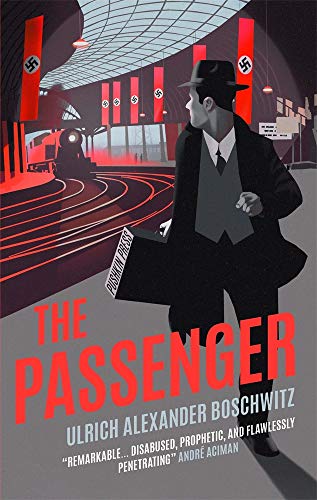
The Passenger by Ulrich Alexander Boschwitz, trans. Philip Boehm. (Pushkin Press)

How to talk about this book? Set in November 1938 in the few days after Kristallnacht it follows Otto Silbermann as he travels around Germany looking for peace and an escape route.

The tension mounts with each journey Otto takes as he frantically tries to stay a free man despite being Jewish. At times it feels more of a roller coaster than a succession of train journeys made by Otto as he crisscrosses Germany.

What is so interesting about this book is that Boschwitz wrote the book in the weeks just after Kristallnacnt and it is an immediate response to the events that saw German Jews villified, arrested and finally imprisoned in concentration camps.

To say I enjoyed the book is impossible - mainly because of the subject - but it was utterly compelling and I had my heart in my mouth repeatedly. It doesn't have a neat ending, and many story threads are left dangling but that is how it has to be - it is a contemporary response to the events of 1938. Otto won't know how his story ends and thus it is right that we don't - that we have to use our imaginations.

The tight focus on Otto took some getting used to as I started the book, I wanted to know more about the supporting characters that we meet. By the end however this tunnel vision worked for me as it conveyed the fear, paranoia and claustrophobia of what life in Germany must have been like for a Jew in 1938.


Boschwitiz's own story is no less compelling and shocking than Otto's and I do urge you to give this book a go if you come across it, so very different than other novels I've read set around this time.

Many thanks to Norfolk Libraries for buying the book after I mentioned it.

Tuesday, 25 May 2021

Micro Review 26


The Swallows' Flight by Hilary McKay (Macmillan Children's Books)

Net Galley eProof

Back in 2018, when my reading stamina was at its lowest, Hilary McKay's The Skylarks' War held me captivated and was one of the first books that I managed to read from cover to cover in a weekend. It was a wonderful book and one that my mum and sister have also gone on to enjoy.

Skylarks' was a book about the lead up to the first world war and just after, whereas Swallows' is a story about the 1930s and world war two. The novel is a sequel to Skylarks' but moves on a generation and this time one narrative strand  follows two German boys and we see the increasing grip of fascism on their lives.

As with the first book I quickly lost myself in this one and found it as engrossing as any sweeping adult book set in the same time period. There are a few coincidences that as an adult I saw coming but with fiction this good I don't mind. I really hope that this becomes a classic text for schools, it is a book that deserves the same reverence given to Carrie's War and Goodnight Mr Tom (and I love that book) and it is definitely deserves to be on any curriculum/reading list far more than the implausible (and borderline offensive) The Boy in the Striped Pyjamas. 

Sunday, 26 July 2020

Equally (or sequel-ly) brilliant!

Umbrella Mouse to the Rescue - Anna Fargher


Originally due to be published in April I've had an advance copy of this book sitting on my Kindle for many months and it has been burning a hole in my curiosity too! I put off reading it for two reasons. Firstly book one was *so* good I was nervous about the sequel  - could it be as good?

The second reason was more personal, half of the joy from book one was reading it along side my family and the heated texts and messages we shared as we read the book. What with the pandemic we've not been able to really get together much this year and so I wanted the closeness that shared reading brings!

When the copy for Kentishbookboy arrived it just so happened that it was one of the weeks his year group was at school but I'm afraid to say neither his mum nor I could wait any longer and we spent every spare moment over two days reading and messaging.

After the climactic and traumatic ending of the first book we were plunged straight back in to Pip's world and like the first book there were moments of tenderness, fear, and excitement as the adventures across France continued. There were so many historical points covered and coupled with the realistic show of emotions and actions that warfare causes I often forgot that the cast were a mix of animals rather than a group of disparate human resistance fighters!

Being an adult and knowing how the real history of 1944 played out in France meant I was pretty sure how the adventure was going to end but the journey there, through the eyes of a band of animals, was gripping and at times downright scary! And the epilogue was (implausibly) perfect for me - a real pleasure to know that this was a complete story and there wouldn't be dozens of further sequels each becoming more far fetched.

Personally I think that the two Umbrella Mouse books deserve to become as popular as War Horse, The Boy in the Striped Pyjamas & Good Night Mr Tom in the way they introduce so many different aspects of war to young readers.

I'm looking forward to hearing what Kentishbookboy and his nan & grandad think when they read the book - hopefully it won't be too long before we can all get together and have a proper book group chat in person.

Tuesday, 5 May 2020

Following on

The Ratline by Philippe Sands


Back in 2016 I was blown away by Sands' first book East West Street I reviewed it in the middle of the year here and it remained one of my tops books of the year when I came to do my round up.

I was a little concerned about The Ratline for two reasons - 1) it is a second book and they can always be tricky & 2) it is another book about the guilt (or not) felt by survivors of the Holocaust - would it just be too much like the first book?

Happily for me neither of my fears came true and while The Ratline does almost continue from the end of the first book (and definitely from the end of the documentary Sands made) it was completely different and taught me so much about Austria during the Nazi period and also the escape routes used by the Nazis as they tried to flee justice.

Thanks to a lot of the children's literature I've read regarding the Holocaust I was aware of how some of the history played out in Austria before, during and after the Anschluss but this has always been from the Jewish/resistance point of view and so to read about it from the other aide was equally fascinating and horrifying.

While I was aware that some high profile Nazis escaped Europe for a new life in South America I had never given any thoughts to how this happened and so read this part of the tale completely fresh. I knew that there had been complicity in some quarters - but just how much was eye opening.

At the heart of this book is Sands' relationship with the son of  SS Brigadesfuhrer Otto von Wachter as he tries to convince Sands (and the world) that his father wasn't a war criminal responsible for deaths of thousands of people.

Sands manages to tell the tale fairly and with an open mind but at the end you feel you know the truth and Sands' own feelings as well as if he'd been marching up and down in front of you with a banner.

This book has been published at the height of the Coronavirus (COVID-19) pandemic and so many of the events and publicity you'd have expected to see just haven't happened, although there are some good  online interviews and reviews to hunt out. I hope that this book isn't lost in the chaos and that it wins as many accolades as East West Street. I also hope that when the paperback is released the pandemic is receding and there are some events I can get to!

Thursday, 19 September 2019

Review Two - book group at a distance

The Umbrella Mouse by Anna Fargher


This was the first book that the Norfolkbookworm and the Kentishbookboy read simultaneously. For me this was a new way to read, usually if a book hooks me in then I read it from cover to cover in as short time as possible. Reading a small amount each night could have felt like the purgatory of a class book but instead for me it was great - this was a really tense book and reading in small chunks was one way to cope with this. It was also dramatic enough that I wanted to pick it up each night!

Again Kentishbookboy's thoughts are in purple and mine in brown.


The Umbrella Mouse.

Synopsis:
1944, and London is under attack. The umbrella shop that a young mouse, Pip Hanway has called her home all her life, is destroyed by a bomb, forcing her to begin a perilous quest to find a new home.

Pip is mouse who lives in an umbrella at a London umbrella shop. It is 1944 and bombing raids on London destroy her home and kill her parents. Pip is saved by a rescue dog and on realising that she is now an orphan decides that she has to get to her mothers relatives, who live in Italy. Through a series of adventures and misadventures she finds herself in Normandy, just after D-Day, working with the animal resistance - Noah's Ark.

Dilemma:

Should young Pip just go straight to the umbrella museum in Gignese, Italy, or should she stay and help Noah's Ark in France?

Pip has to learn to cope as an orphan in wartime London and then also has to decide if she is brave enough to help in some of the Noah's Ark missions. She also has to learn who she can trust and who she can't.

Morals/Themes:
Teamwork, friendship and courage all show that no matter your size, you can have an impact on the world. The author is clever to use the hardship of the animals to parallel the same hardships faces by the human resistance during WW2 and can express the characters' feelings clearly.

This book packs a mighty wallop for a middle-grade novel. The main theme is survival in wartime and also the decisions that you have to make in testing situations. The book does not shy away from any aspect of World War Two history but yet makes them accessible to a younger age range by making the characters animals rather than humans (although there are some humans who have their own tragic story arc).

Recommendation:

The book was great. there are tons of tense moments which encouraged us to read on...Pip is a wonderful chracter in the story, very adventurous and inspirational. Can't wait for book number two! Five stars.
I enjoyed this book, it was certainly tense and action packed, and for the most part credible (if you can handle talking mice!) but I didn't quite connect emotionally with it and unlike other children's books about WW2 I've read I wasn't moved to tears. I am pleased that the ending wasn't rushed and I will be reading any other books about Pip as soon as they are available. A solid 4 stars from me.

I was pleased that Fargher added in a nice author's note after the book proper to show just how based on real events it was - I was happy that my thoughts on one of the very first human characters to appear were right!

I've also enjoyed messaging and tweeting with family (and the author) as we read through the book. Highlights included

We don't trust xxxx 
Book is still very tense in the 3 chapters we read tonight 
Its not good for the blood pressure is it? 
If this was a film or TV show I'd be hiding behind the sofa by now


We know that we won't always agree on the books we read together, but I think that we'll definitely be reading more books this way as the year progresses - I think the next book up is going to be a totally different read as we try a David Walliams book.

As an aside Nanny and Grandad have both now finished this books and they both enjoyed it too - although they are lamenting the fact that Kentishbookboy is growing up so fast and tackling books with such grown up themes!


Friday, 29 March 2019

Book Review: Island Song

Island Song - Madeleine Bunting.

I've written on here before about liking books set in the Channel Islands during World War Two and so it is unsurprising that when I saw this go by on Net Galley I requested a copy PDQ.

Like so many books this one starts with a mystery being revealed at the death of a parent and Ros finds her world turned upside down Everything she thought she knew about her life, and family events, are a lie.

The book isn't quite contemporary and that adds to this story as the layers are unpeeled slowly - literally at 'snail mail' pace. Our characters publish notices in papers, research in archives and travel to places to have conversations in person in order to find the truth. It helps the story unravel naturally rather than sensationally, and allows the flashbacks to slip in easily without upsetting the flow of either half of the tale.

The story is a new look at the occupation of the Channel Islands, and not one I had read before. I really didn't see the ending coming either, and it was far more satisfying than the one I'd imagined.

In the best tradition of books this left me wanting to know more about some characters and I'd love to read a companion work to this telling the other side of the story.

The hard copy of the book is published next week (April 4th) but the ebook is available now!

I received a copy of this book free of charge from Granta/Net Galley and I am under no obligation to review the book, nor did I receive any recompense for the review.

Sunday, 17 February 2019

A winning read

The Cut Out Girl by Bart Van Es


As soon as I saw this book on the Costa Longlist I knew that I'd want to read it and finally it has been my turn to borrow it from the library.

It was worth the wait and despite beating one of my favourite reads from last year (The Skylark's War) in the Costa prize now I have read it I can't be too sad at this turn of events.

I've written before about my interest in books about the Holocaust, in fact my dissertation for my first MA was about how such an event is portrayed in children's literature. This new addition to the canon - all about how one Jewish girl was saved by various Dutch families was right up my street.

The mix of family history (it was the author's family who played a part in saving Lien), modern history and thought, detailed scholarly research and Lien's own autobiography made this book a compelling read. It was also shocking and not just because of the horror of the extermination camps.

I had the idea, mostly gained through literature admittedly, that Holland had a good reputation when it came to their actions during WW2. So many Jews fled there from Germany during the 1930s that to me it seemed like a good place for people to have fled to.
We then have the stories of the heroic people who hid Jews and worked for the Resistance. The praise heaped on those hiding the Frank family and the other similar tales lead to me to believe that while the Dutch weren't quite as helpful as the Danish in saving their Jewish population they were definitely 'good guys.'

Van Es dispels this early on:
"The Jewish wartime death rate in the Netherlands, at 80%, was more than double that of any other Western country, far higher than in France, Belgium, Italy or even Germany and Austria themselves."  p.58
Van Es, like me, was shocked to discover this, and even more so when he found out that along with various geographic and military reasons "it was the native administration that brought death to the Jews" (p. 58).

The poor behaviour of (some) Dutch people continued through the war, and is an integral part of Lien's story, as well as afterwards when survivors returned home or people emerged from hiding.

I know that history is rewritten by the victors but this new knowledge adds to the unease I felt on visiting the Anne Frank House last year. It is so easy to promote the bits of your history that you want people to concentrate on by passing over the negative aspects quickly. The suffering that all of Holland experienced in the winter of 1944/45 and then in rebuilding the country as a liberal land has airbrushed a lot of the darkness.

It is early in the year to be picking 'best books' but I have a feeling that this one will stay with me for a long time, and in many ways is a companion read to one of my top reads from a few years ago - East West Street by Philippe Sands.


Friday, 4 May 2018

War and Agony (aunts)

Book Review: Dear Mrs Bird

(review copy provided by Net Galley)

This was a book I read quite a while ago, before I fell ill in fact, but I was looking back through my list of books read and realised I'd never talked about it.

This was a book that at first I didn't think I was going to enjoy, it seemed so light, and to a great extent predictable but I persevered and found that my first opinions were deceptive.

Emmeline is a typical literary WW2 heroine in many ways, she comes from a privileged background but is 'slumming it' in London. She is doing her bit for the war effort as she is a phone dispatcher for the Auxiliary Fire Service just as the Blitz is increasing in intensity.  Her dream it to be a war correspondent and she is overjoyed to get a job with the London Evening Chronicle, it isn't quite her dream job however - she ends up being part of the agony aunt team for one of the other publications from the Chronicle's stable.

It is at this point that the book becomes both the most predictable and the most unpredictable and I got fully swept up into the lives of the protagonists and by the end I'd cried more than once!

This is a book very much in the vein of Their Finest by Lissa Evans - mostly fun, frothy and light but with the occasional emotional wallop. It takes familiar events of the war and weaves them into the narrative in a way that is believable as well as being just one coincidence too far.

This review doesn't seem as positive as the feeling the book left me with last autumn which seems slightly unfair - so many of the details of the book, and the emotional impact it had on me are very strong and sometime you do just want a little bit of light-hearted reading.  That I can still recall so much of the book is also a point in its favour - there are some books I read at the end of November last year that I can't recall at all...

Saturday, 22 April 2017

Book vs Film (sort of)

There hasn't been too much on at the cinema lately that I've wanted to see but typically just now there are three films all once.

Another Mother's Son was my priority as it covers a period of history that I am very interested in - the German Occupation of the Channel Islands during WW2.

I can date my interest in this area back to childhood holidays in Jersey and Guernsey when dad took me to WW2 locations such as the Underground Hospital in Jersey. The first book I read on the topic (and possibly my first autobiography and first WW2 book) was A Child's War by Molly Bihet. She was certainly the first author I met and I still remember the occasion and location and have my signed copy of the book.

Since then I've read lots of books set in the Channel Islands during the Occupation, in fact one of my favourite books of all time is The Guernsey Literary and Potato Peel Society which is heavily influenced by the true story depicted in Another Mother's Son.

The film certainly packed an emotional punch, and although I did know how the story ended I still was moved by it and generally enthralled, but...
I just found the film to be too historically inaccurate, too Hollywood. There was nothing too obvious, just enough niggles to make me unhappy as I was watching it.

My main problem was that the film. although based on the true story of Louisa Gould, felt less real than the novels I've read.  The people just didn't come across as oppressed, or as hungry as other sources have shown and the timeline at the end was just a little too compressed. And don't get me started on the accents... I am going to be generous and say that perhaps this is because many of the books I've read were set on Guernsey and this is Jersey but I am not sure this really can explain my feelings.

I know I am forever saying I prefer the book to the film but in this case I am really surprised that this is the case. It doesn't feel right that a simple novel based on many sources and thoroughly fictionalised should be better than the true story.

The film is worth watching, and I like to support British films but in this case I really do urge you to read the books, especially Guernsey Literary and Potato Peel Pie Society.


Tuesday, 4 April 2017

March Reading Round Up

March was a good month for reading with me, thanks to that lovely holiday at the start of the month (and then a nasty cold later on) I ready 30 books in a month of 31 days!

Several of the books are for a review project and again even if they were amazing I can't talk about them or review them yet, but that notwithstanding it was a pretty good reading month.

The Bear and the Nightingale and Greatest Hits which I read and reviewed at the start of the month were definite hits this month but a few of the other highlights of the month include the following.

 Everyone Brave is Forgiven by Chris Cleave. This is an interesting book about London in World War Two, following four main characters during the early years of the conflict. I liked this book a lot because it managed to tell a new story of this era to me, I've read a lot of books set in this time frame and this felt new and exciting - despite none of the characters being particularly likable.


The Girl in the Blue Coat by Monica Hesse. Again a World War Two book but this one set in Amsterdam. It starts interestingly with the protagonist being a black marketeer but then evolves into a more complicated resistance story. A few bits of language jarred slightly but on the whole I was kept guessing all the way through, in the right way.

In Praise of Shadows by Junichiro Tanizaki. This book was recommended to me by a friend as I asked for recommendations of books translated in 1977 as part of my personal challenge. It was a slim volume about one man's musings on how traditional Japanese life is being changed by modern ways - and this book was written pre-WW2 so is a real snapshot of a lifestyle now totally vanished. It is hard to explain fully but as this is such a slim volume I urge you all to hunt it down, read it and then go out for great Japanese food!

My final picks for the month are the Birchbark House books by Louise Erdrich.  I've read a few of her adult books but this is a children's series is all about an Ojibwa family at the time when the Native American population was under greatest threat from white settlers. I've been a long time fan of the Little House on the Prairie series but I know that they aren't very historically accurate and it is great to find another series from the same time frame but telling the other side of the story.